
Arrest Records in Montgomery County
An arrest record starts when a law officer takes a person into custody and books them. In Montgomery County, the Sheriff's Office runs the jail and the booking process. Local police departments make arrests too, but most people who are held end up booked at the county jail on West Second Street in Dayton. The record from that booking lists the person's name, the booking date, the charges, the bond, and often a mugshot. An arrest record is the first paper trail in a criminal case. It does not mean the person is guilty.
Lead with the arrest record, then know that it is only the start. After an arrest, the case may move to court. That is when a separate file opens with the Clerk of Courts. Those court files cover pleas, motions, hearings, and the final result. They live in a different system from the jail roster. For the full case history, see Montgomery County court records, which pulls from the Clerk's online portal. This page stays focused on the arrest side: the booking, the roster, the photos, and the rules that govern them.
How to Search Montgomery County Arrest Records
The fastest way to find a recent arrest is the Sheriff's jail roster. Sheriff Rob Streck's office posts a "Persons in Custody" list online. It shows people held in the listed Montgomery County jail right now. You can search by last name and first name, or click an A to Z letter link to browse. The roster updates every 30 minutes. It only shows people in the listed jail, so a person held elsewhere will not appear.
Here is a simple path for finding a recent arrest in the county.
- Open the Sheriff's Persons in Custody roster and read the page header.
- Type a last name and first name in the search boxes, or click the matching A to Z letter.
- Check the booking date and charges on the result to confirm you have the right person.
- If the person is not listed, call the jail at 937-225-4160 to confirm custody status.
The roster is the right tool for current custody. For an arrest that led to charges, the court file is the better source. The Clerk of Courts runs Public Records Online v3, where felony and misdemeanor case dockets appear by name or case number. For prior arrests across the whole state, you would use the state criminal history check run by Ohio BCI, covered further down. Each tool answers a slightly different question, so pick the one that fits.
The Prosecutor and Public Defender in Montgomery County
After an arrest, the case lands with the Montgomery County Prosecutor. The Prosecutor, Mat Heck Jr., decides what charges to bring and handles the case in court. The office prosecutes felonies in the Common Pleas General Division and works with police on serious crimes. It also runs a Victim/Witness Division that helps crime victims through the court process. That division runs a Sexual Assault Hotline at 937-225-5623 for survivors who need help.
You can read about the office on the Montgomery County Prosecutor page, which lists its duties. The screen capture below shows that official page.
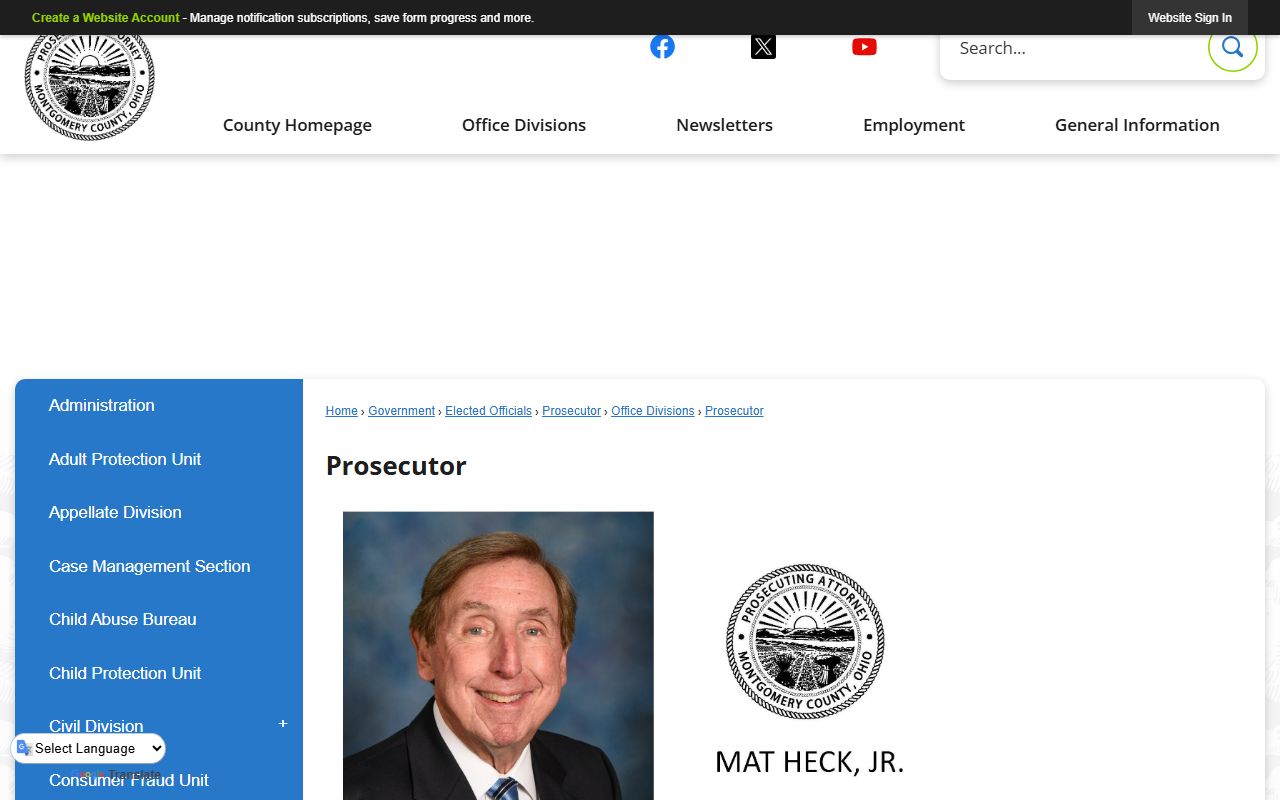
The Prosecutor's site is the place to learn how charges move forward after a booking.
Victim services sit under the same office. The Victim/Witness Division keeps people informed about court dates, helps with statements, and explains the steps of a case. You can find its services on the Victim/Witness Division page. The image below shows that resource.
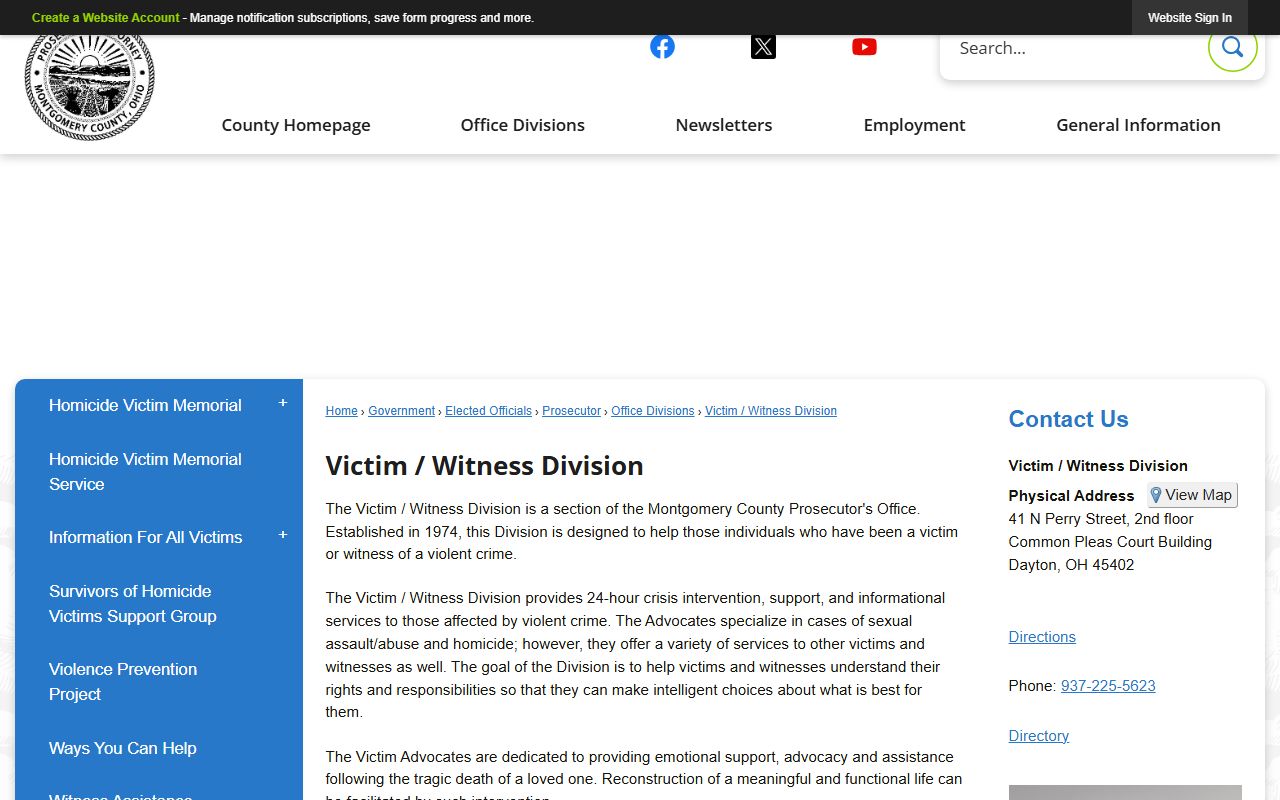
That page is useful for anyone tied to a case as a victim or a witness.
People who cannot afford a lawyer get one through the Montgomery County Public Defender. The office has served indigent defendants since 1976. It takes felony, misdemeanor, and juvenile cases for clients who qualify. You can see its work on the Public Defender site. The capture below shows that homepage.

The Public Defender page explains how to apply for a court-appointed attorney.
Arrest Records vs. Criminal Court Records
An arrest record and a criminal court record are not the same thing. The arrest happens first, at booking, and the Sheriff holds that record. The court record opens later, only if the Prosecutor files charges. Many arrests never turn into a conviction. Some never even reach court. So an arrest record alone tells you that a person was booked, not how the case ended.
The table below sums up the two record types.
| Arrest Record | Criminal Court Record | |
|---|---|---|
| Source | Sheriff or police | Clerk of Courts |
| Created When | At booking | When charges are filed |
| Where to Find It | Sheriff jail roster | Public Records Online v3 |
| Contents | Booking info, charges, bond, mugshot | Pleadings, motions, disposition |
| Shows the Outcome? | No | Yes |
To trace what happened after the arrest, go to the court side. The General Division handles felony cases. Misdemeanors and OVI charges go to the Municipal Court, which has an Eastern Division in Huber Heights and a Western Division in Trotwood. Adult criminal case dockets show up in the Clerk's online search. For the full file, follow the link to court records.
Charges vs. Convictions in Montgomery County Arrest Records
This is the most misread part of any arrest record. A charge is an accusation. A conviction is the result of a guilty plea or a verdict. A person can be charged, booked, and later cleared. The charge still shows on the arrest record, but it does not prove guilt. Reading a booking sheet as proof of a crime is a common mistake.
The comparison below makes the line clear.
| Charge | Conviction | |
|---|---|---|
| Stage | Accusation at or after arrest | Verdict or guilty plea |
| Burden of Proof | Probable cause | Beyond a reasonable doubt |
| Decided By | Police or prosecutor | Judge or jury |
| Public Record | Yes | Yes |
Why does this matter so much? Because a dismissed or not-guilty case can stay on a record unless the person asks to seal it. Ohio law lets people seal many non-conviction records under ORC 2953.33. So a clean arrest record is not the same as no record at all. When you read an arrest entry, check the court docket for the disposition before you draw any conclusion.
Mugshots and Booking Photos
A mugshot is the booking photo taken at the jail. In Montgomery County, the Sheriff takes these photos as part of the booking process. They often appear with the arrest entry on the jail roster. A mugshot is a public record in Ohio, like the rest of the booking sheet, unless a law or court order restricts it.
People sometimes want a mugshot taken down. That is hard once a record is public. The photo reflects an arrest, not a conviction, so it carries the same caution as any charge. If the case was dismissed or sealed, the underlying court record may come down, but third-party sites that copied the image are not run by the county. For the official photo and booking data, the Sheriff's roster is the source of record.
State Criminal Records vs. the Local Court Docket
The jail roster and the court docket are local. A statewide criminal history is different. Ohio's Bureau of Criminal Investigation, known as BCI, collects and shares criminal record data under ORC 109.57. A BCI check pulls arrests and dispositions reported from across the state, not just Montgomery County. Employers, licensing boards, and some volunteers use the BCI background check for that reason.
So which do you use? It depends on the question.
- To find a recent arrest in the county, use the Sheriff's jail roster.
- To trace one case from start to finish, use the Clerk's court docket.
- To get a full statewide criminal history, use a BCI check under ORC 109.57.
A BCI report is the official state record. The local court docket shows the detail for a single Montgomery County case. The two often overlap, but they are kept by different offices and serve different needs. Knowing that keeps you from treating one local arrest entry as a complete background.
Background Check Considerations
Free public records and a formal background check are not the same. A casual lookup on the jail roster or court portal is fine for personal use. But using records to decide on a job, a loan, housing, or insurance falls under the federal Fair Credit Reporting Act. That law sets rules for how those checks must be run and who can run them. Free county tools are not built for FCRA-regulated decisions.
For an official background check, the BCI process is the proper route. For a single court case, the Clerk's docket gives the facts. Mixing up a quick search with a regulated report can cause real legal trouble.
Important: This site is a private resource and is not a consumer reporting agency under the FCRA, so its data cannot be used for credit, employment, housing, or insurance decisions.
Restricted Criminal Records in Montgomery County
Not every arrest record is open to the public. Ohio law shields several types. Juvenile records are the clearest example. Records of people under 18 in the Juvenile Court are restricted under ORC 2151.14, so they are not treated like adult arrest records. The image below shows that statute.
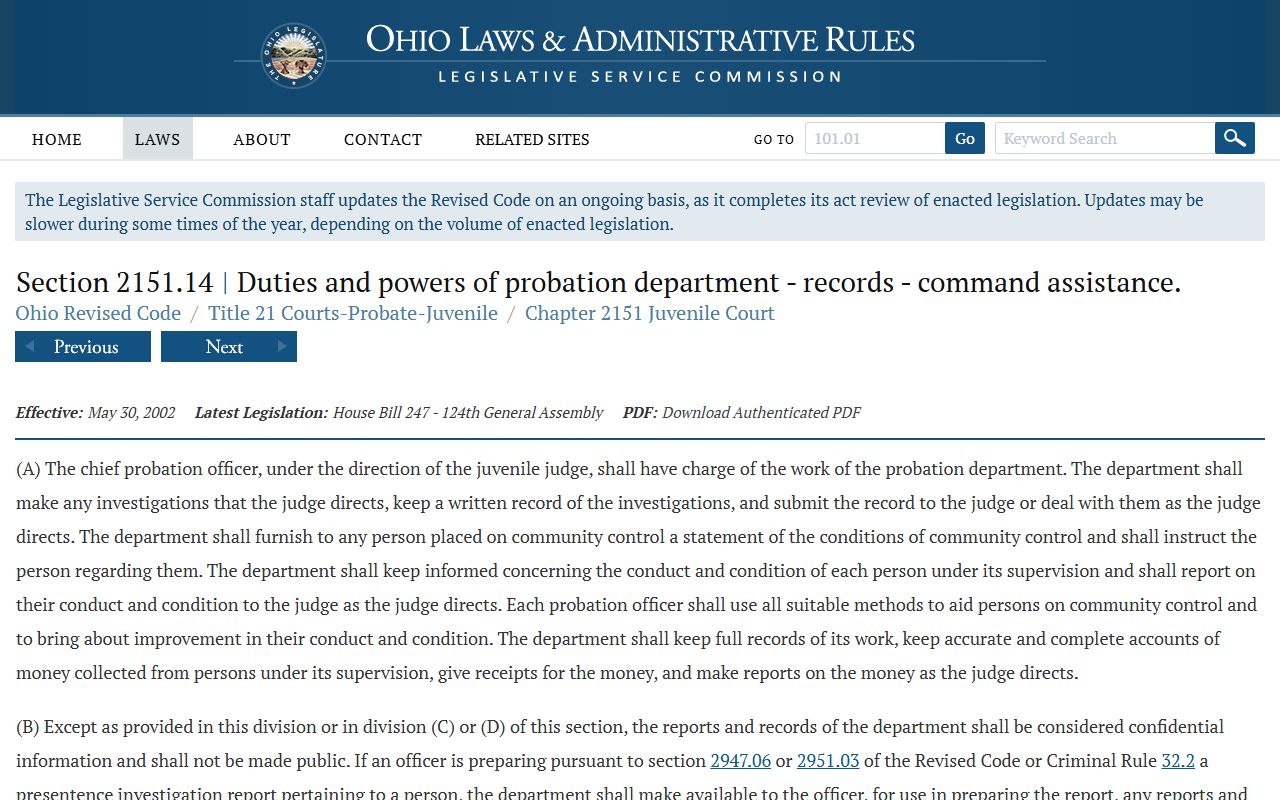
That section explains why a juvenile arrest does not show up the way an adult one does.
Sealed and expunged records are also off limits to the public. Ongoing investigations can be withheld too, since releasing them could harm a case. The county redacts personal identifiers from records it does post. These limits exist to protect privacy, fair trials, and the young, not to hide public business. Most adult arrest and court data stays open.
Note: a person who was arrested but never convicted may ask the court to seal that record, which then removes it from public view.
Sealed vs. Expunged Records
People often use "sealed" and "expunged" as if they mean the same thing. They do not. A sealed record is hidden from the public but still exists for limited official use. An expunged record is destroyed and treated as if it never happened. Ohio changed these rules in recent years, so the terms now carry sharper meaning under state law.
The table below lays out the difference.
| Sealed | Expunged | |
|---|---|---|
| What Happens | Hidden from public view | Destroyed, as if it never existed |
| Law Enforcement Access | Limited access remains | Very limited access |
| Governing Law | ORC 2953.32 for convictions | ORC 2953.32 and related sections |
| Non-Conviction Cases | ORC 2953.33 after dismissal or no bill | Same path may apply |
The right statute depends on how a case ended. Sealing or expunging a conviction falls under ORC 2953.32. A case that ended in dismissal, a no bill, or a not-guilty finding follows ORC 2953.33. The capture below shows that section for non-conviction records.
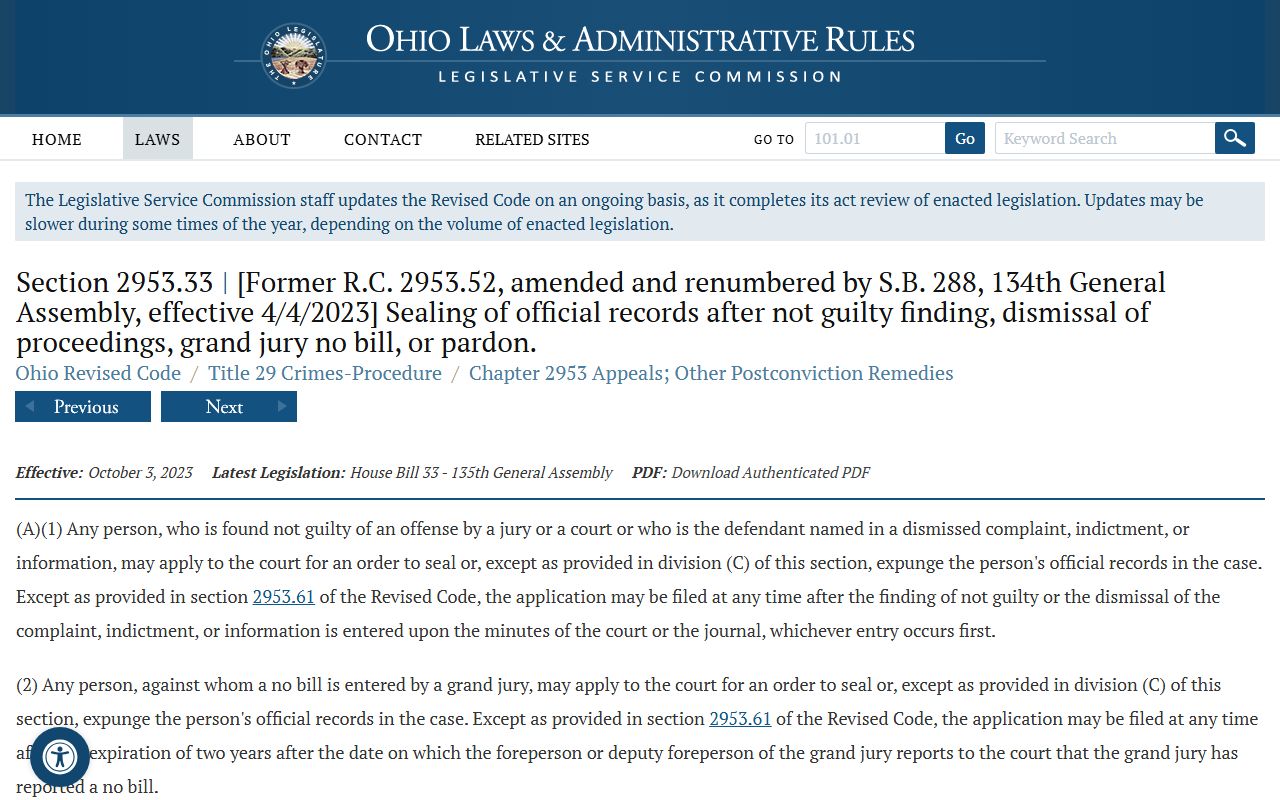
That statute is the key one for arrest records where the charges did not stick.
Two more rules round this out. ORC 2953.34 explains who may still inspect a sealed record and when. ORC 2953.36 lists convictions that cannot be sealed at all, such as certain serious offenses. So not every record can be cleared. A person files the motion in the court that handled the case, the General Division for felonies or the proper Municipal Division for misdemeanors, and the judge decides.