
What Montgomery County Probate Records Cover
Probate is the court process that settles what a person leaves behind. The Montgomery County Probate Court, the Probate Division of the Court of Common Pleas, handles these matters for the county. It opens estates, names the people who manage them, and tracks the work until the file closes. The records that come out of this process include the will, the inventory of property, the accountings, and the final orders that move assets to the heirs.
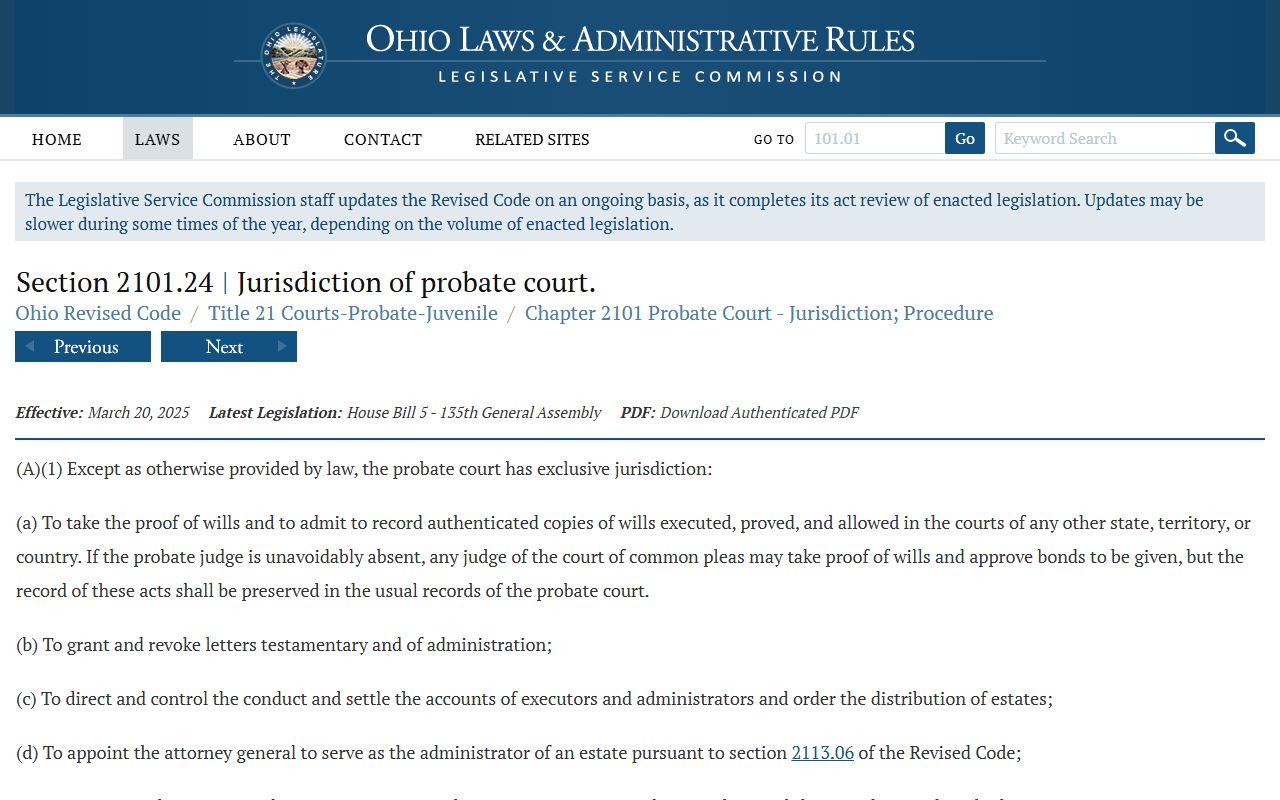
The court's reach is broad. Under Ohio Revised Code section 2101.24, the Probate Court hears estate and trust administration, the appointment of guardians for minors and for adults found unable to manage their own affairs, adoptions, marriage licenses, name changes, and the commitment of people who are mentally ill. It also handles conservatorships, wrongful-death settlements, claims for minors who were hurt, and birth corrections or registrations. Certain civil cases land here too. So a probate records search can turn up far more than just a will.
Some of these files are open. Some are not. Estate files and name changes are largely public. Adoption files and mental-health records are sealed and not handed out at the counter.
Probate Terms Defined
Probate paperwork is full of words that do not come up in daily life. A quick read of the main terms helps you make sense of what you find in a Montgomery County probate file. The list below covers the ones you will see most.
- Testator
- The person who made the will. When that person dies, the will is filed with the court.
- Executor
- The person named in the will to carry out its terms, pay the debts, and pass on what is left.
- Intestate
- Dying without a valid will. The estate then passes by Ohio law, not by the wishes of the person who died.
- Guardian
- A person the court appoints to make decisions for a minor or for an adult who cannot manage their own care or money.
- Conservator
- A person who asks the court to manage their own affairs, often by choice, with court oversight in place.
- Fiduciary
- The broad term for anyone the court trusts to act for an estate or person, such as an executor, administrator, or guardian.
- Ward
- The minor or adult who is under a guardianship and whose interests the guardian must protect.
How to Search Montgomery County Probate Records
The Probate Court keeps its own online search, apart from the Clerk of Courts portal that covers most other cases. The court says its website is updated daily and offers information on cases filed with the court. The case search runs inside an embedded window, so the exact fields are not laid out in plain text. Most probate searches work off a name or a case number. The screen below shows where the search lives.
The Probate Court Case Search is the starting point for Montgomery County probate records online.
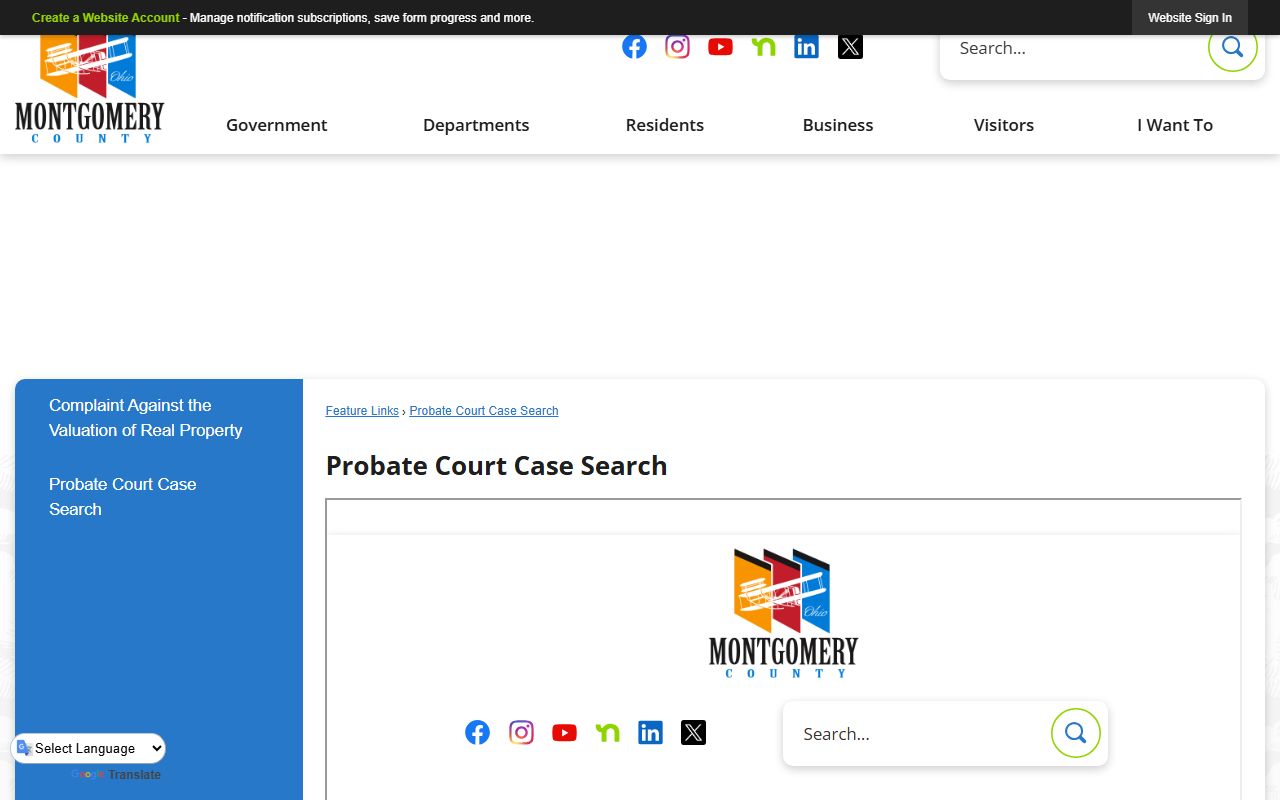
That tool returns the docket and basic case data for matters the court makes public. It does not include adoption or mental-health files. The steps below follow the usual path for a name search.
- Open the Probate Court Case Search page and load the search window.
- Enter the last name and first name, or the case number if you have it.
- Open the matching case to view the docket, parties, and filing dates.
If you need a copy of a record you find, the court can provide it. Online results are not certified, so a certified copy must be ordered from the court at 937-225-4640.
The Montgomery County Probate Court Office
There is one Probate Court for the county, and it sits inside the Court of Common Pleas as its Probate Division. Judge David D. Brannon serves as the Probate Judge. The court is unusual in one way: the probate judge is also the Clerk of the Probate Court, and deputy clerks keep the records and make them available. The office is on the second floor of the building at 41 N. Perry Street in downtown Dayton. The court does not accept fax filings.
Montgomery County Probate Court
Probate Division of the Court of Common Pleas
41 N. Perry Street, 2nd Floor
Dayton, OH 45422-2155
937-225-4640
Fax 937-496-3181 (no fax filings)
Monday–Friday, 8:30 a.m. to 4:30 p.m.
For certified copies, call the same main line at 937-225-4640. The Marriage License Department uses a separate number, 937-225-4400. Keep in mind that the staff can hand you forms and point you to instructions, but they cannot give legal advice. Only attorneys licensed by the Supreme Court of Ohio may practice law, so court workers cannot tell you which form fits your case.
Estate Procedures in Montgomery County Probate
When someone dies, the goal of probate is plain. The court makes sure the estate is passed out under the will or by law, that creditors get paid, and that estate and income taxes are filed and paid. The Ohio legislature built more than one path to do this, and the right path depends on the size and shape of the estate. Court staff cannot tell you which one to use.
The Estate page lists three main procedures. Each fits a different situation, from a small estate that can close fast to a large one that needs full court oversight.
- Summary Release From Administration. The fastest route, used for the smallest estates where a short filing can release the assets.
- Release of Estate From Administration. A middle path for estates that are still modest but need more than a summary release.
- Full Administration. The complete process, with a fiduciary, an inventory, creditor notice, accountings, and final distributions.
The court's Estate page spells out the purpose of probate and these three Montgomery County probate records procedures.
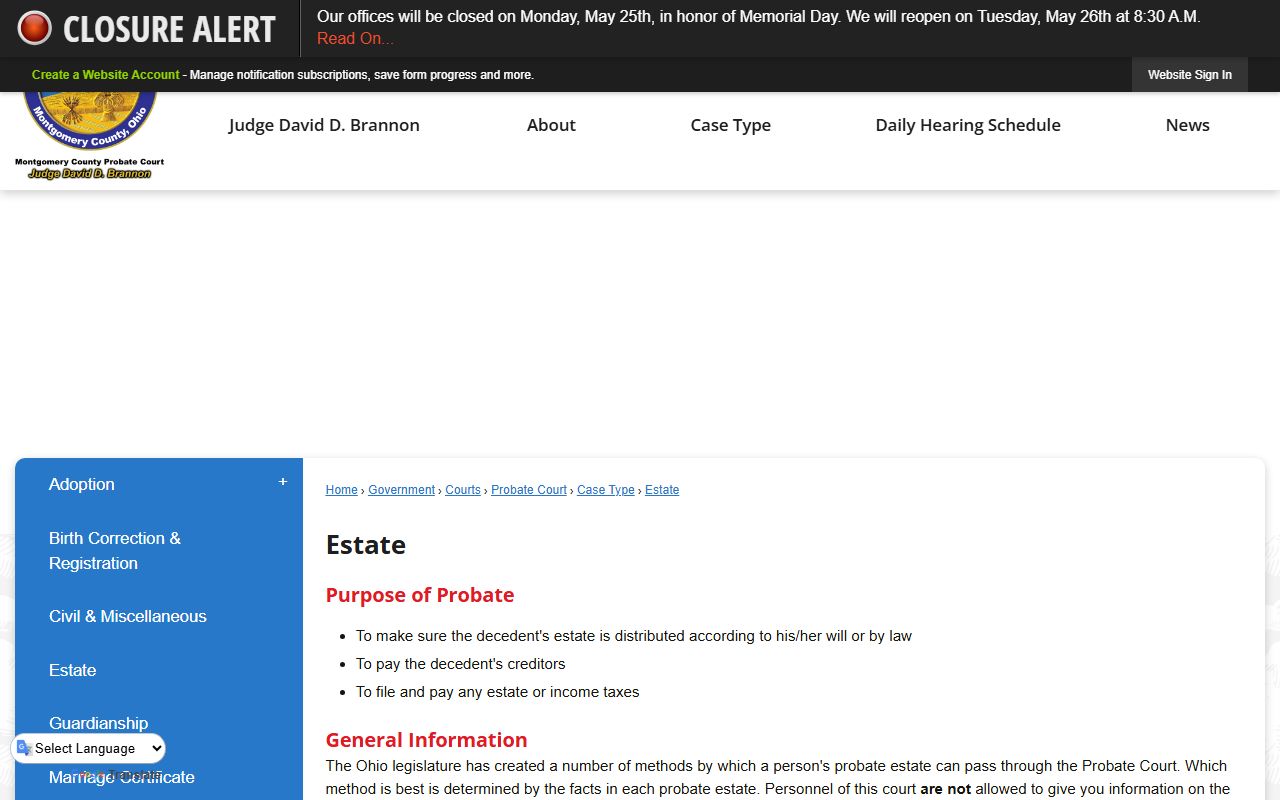
A full administration runs through a set sequence. The court appoints a fiduciary, who then files an inventory, gives notice to creditors, submits accountings, gathers consents and waivers, and at the end distributes what is left and closes the case. Certified copies of letters, entries, or other records can be requested from the court at any point. The order of steps shifts a bit with the case type, but the path above holds for most estates.
Note: Court staff cannot advise which estate method or forms to use, so an attorney is the right source for that choice.
Montgomery County Probate Forms
Probate runs on forms, and the court posts them online. The forms are Ohio Supreme Court Standard Probate Forms, local Probate Court forms, or a mix of both. They come as PDFs. Not every matter has a ready-made form, and some forms need to be changed to fit the facts of a case. The screen below shows the library.
The Probate Court Forms page holds the standard and local PDFs used to file Montgomery County probate records.
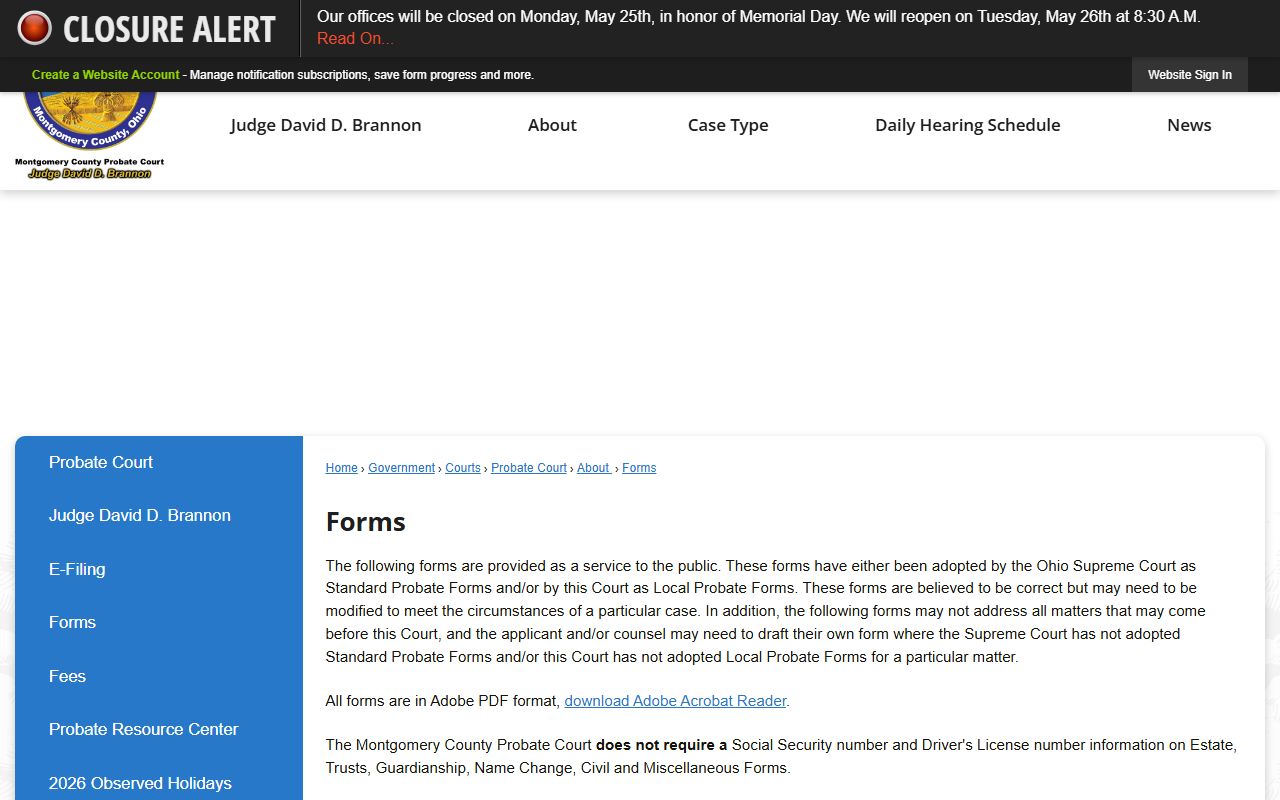
A useful point on privacy: the court does not require a Social Security number or a driver's-license number on its Estate, Trust, Guardianship, Name Change, Civil, and Miscellaneous forms. Examples on the page include the Admission of Lost, Spoliated, or Destroyed Will, Ancillary Administration, the MC 110 Affidavit for Search of Address, the MC 2.0a Notice of Deposit of Original Will, and various checklists. If you are not sure a form fits your case, the staff still cannot choose it for you. That is a job for a lawyer.
Guardianships and Name Changes
Estates are only part of the docket. The Probate Court also appoints guardians for minors and for adults who cannot manage their own affairs, a role set out in Ohio Revised Code section 2101.24. A guardian may be named over the person, the estate, or both. The court watches the case after that, since the guardian must report and account for the ward's money and care.
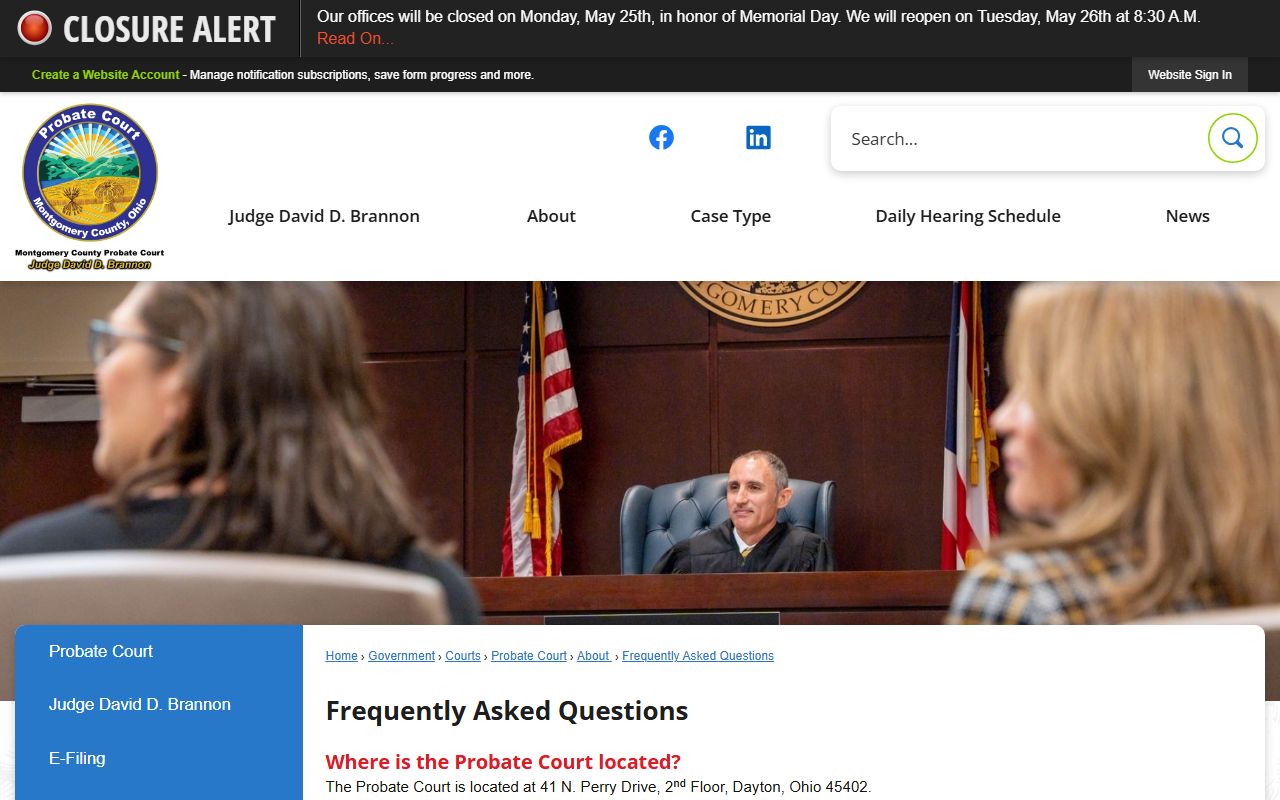
Conservatorships work in a related way, but they often start with the person who needs help asking the court to step in. Name changes run through this same court, and those files are generally open to the public. So are most guardianship dockets, though sensitive details inside a file may be limited. The court's Frequently Asked Questions page answers many of the common questions about how these cases proceed.
The Probate Court FAQ page covers guardianship, name change, and other Montgomery County probate records questions.
For family records that fall outside probate, the related pages help. Marriage license records sit with this same court, while divorce files live with the main clerk. See the county's marriage and divorce records page for that side.
Fees for Montgomery County Probate Records
Getting copies of probate records has a cost. The court does not publish a separate probate copy fee in the captured sources, so the figures below follow the Clerk of Courts copy rates that the county uses for court records across its offices. These cover the common copy types you would order from a probate file. The marriage license fee is shown because the Probate Court issues those licenses.
| Item | Amount |
|---|---|
| Plain copy, per page | $0.10 |
| Certified copy, per page | $1.00 |
| Authenticated / exemplified copy | $5.00 |
| Marriage license | $75.00 |
Online records pulled from the case search are not certified. If you need a copy that holds up in a legal matter, order a certified copy from the court. A certified copy carries the court's stamp and costs a dollar a page, while a plain copy is a dime. To order one, call 937-225-4640.
What Montgomery County Probate Records Show
A probate file builds up as a case moves. In a full estate, the file holds the will if one was left, the application that opened the estate, and the order naming the fiduciary. After that come the inventory of property, the notice to creditors, the accountings that show money in and out, and the consents or waivers signed by heirs. The final entries record how the assets were passed on and close the case.
Guardianship files show the petition, the order of appointment, and the reports the guardian files over time. Name change files are short by comparison, holding the application and the order. The court's jurisdiction over all of this comes from Ohio Revised Code section 2101.24, which lists the matters the Probate Court may hear.
Section 2101.24 of the Ohio Revised Code sets out the jurisdiction behind Montgomery County probate records.
For court files outside probate, such as criminal, civil, and traffic cases, the main county portal is the place to look. See the county's court records and public records pages for those.
Restricted Probate Records
Not every probate file is open. Two types are kept out of public view. Adoption records are sealed by law and are not readily available at the counter or online. Mental-health and commitment records are also closed, since they involve private medical and personal facts. The court does not make these files part of its public case search.
Most estate, trust, guardianship, conservatorship, and name change records are public, though a clerk may limit sensitive details within a file. If you are looking for an adoption or a mental-health record, a public records search will not turn it up. Those paths run through narrow legal channels and often need a court order. When in doubt, ask the court what is open before you make the trip.