
How Montgomery County Warrants Show Up
Here is the honest part. The county does not run a single, public, active-warrant portal where you type a name and pull up every open warrant with a bond and a court attached. That kind of stand-alone tool was not found in the official county sources. So do not trust a site that claims one. Warrants in Montgomery County live inside other records, and you have to know which ones to check.
Warrant info turns up in a few places. It shows as docket events in criminal and traffic cases, such as a failure-to-appear, a capias, a bond entry, or a plain warrant line. It can show in the county jail custody roster when a person gets booked on an active warrant. It can come back through the Sheriff's records, and it sits inside Municipal Court and Court of Common Pleas case files. The best first step is the Clerk of Courts case search, because it ties a warrant back to a real case number and a court.
Most adult criminal, traffic, and civil cases are searchable through Public Records Online v3 at https://pro.mcohio.org/, the Clerk of Courts case portal. It covers Municipal Court traffic and criminal cases, Common Pleas General Division criminal cases, Domestic Relations, and the Second District Court of Appeals. It does not cover Probate or most juvenile records. If a warrant is tied to one of those covered cases, the docket is where the event lives.
Types of Montgomery County Warrants
Warrants are not all the same. A judge or magistrate issues them for different reasons, and the type tells you a lot about how to clear it. Some come from a brand-new charge. Some come because a person missed a court date or skipped a payment. A few are sealed while police still work a case. Knowing the type up front saves time when you call the court.
- Arrest warrant
- An order that lets police arrest a person on a criminal complaint or charge. It is the warrant most people picture.
- Bench warrant / capias
- An order a judge issues after a missed court date, a missed sentencing or probation event, contempt, or a failure to follow a court order.
- Search warrant
- An order that lets officers search a place or seize property. It may stay sealed while an investigation is still active.
- Fugitive warrant
- An arrest based on a warrant out of another state or county, used to hold a person for that other jurisdiction.
You may also see the term capias pro fine in some courts, which is tied to an unpaid fine. Local Ohio usage of that exact phrase varies, so confirm with the court that holds the case before you assume what it means.
How to Search Montgomery County Warrants
Since there is no single warrant list, the smart move is to search the case dockets and the jail roster together. Start with a name or any case number you already have. Read the docket events closely, because the words failure-to-appear, capias, bond, and warrant are the flags you want. The steps below walk through a normal name or ticket search through the Clerk of Courts case portal.
- Open Public Records Online v3 at https://pro.mcohio.org/ and accept the portal disclaimer, which states the data is a convenience and not certified.
- Use the General Search tab. Enter a last name and first name, or a case number, or a traffic ticket number if you have one.
- Pick the right Case Type for the matter. Criminal and traffic types are listed in the search-field table below.
- Open the matching case and read the docket entries from the bottom up. Look for a capias, a failure-to-appear, a bond entry, or a warrant line.
- Note the court and division on the case, since that tells you who to call to clear the warrant.
- If the person may be in custody, also check the jail roster at https://www.mont.miamivalleyjails.org/ to see if they were booked.
Only the first 1,000 records come back on any search, so use the narrowest data you have. If you cannot find a case, you can also ask the Sheriff through a records request or call the court division that would handle the charge. For the full charge history behind a warrant, see Montgomery County arrest records and the broader court records search.
Note: Warrant entries can be added to a docket before the person ever knows, so a clean search today does not promise a clean record next week.
Montgomery County Warrant Search Fields
The case portal is where warrant events live, so the search fields below are the ones that matter for warrant work. You do not need every field. One good field, like a last name or a ticket number, is often enough to land on the right case. The Case Type dropdown helps when a common name returns too many hits and you need to narrow to criminal or traffic.
| Field Label | Type | Required | Notes |
|---|---|---|---|
| PRO Case Number | Text | No | Search a specific criminal or traffic case. |
| Last Name | Text | No | Search a party name; pair with first name to narrow. |
| First Name | Text | No | Used with last name for common names. |
| Ticket Number | Text | No | Best for traffic warrant and failure-to-appear cases. |
| Case Type | Dropdown | No | CR; CRB Eastern/Western; CRA Eastern/Western; TRD; TRC; Parking. |
CR points to Common Pleas criminal felony cases. CRB and CRA values are Municipal Court criminal matters split between the Eastern and Western divisions. TRD and TRC are traffic case types, and Parking is its own group. Pick the type that fits the charge you think drove the warrant.
What a Montgomery County Warrant Entry Shows
There is no captured sample of a stand-alone warrant listing, and the county does not publish warrant details such as a bond amount or an issuing court inside a single warrant database. No honest source should pretend one exists. What you actually see is the warrant written as an event on a regular case docket, next to the other filings and orders in that case.
When you open a covered case, the docket entries match the official court docket. A warrant or capias shows as a dated line in that list. Around it you find the case number, the case title, the court and division, and the other filings that explain why the warrant was issued. Bond figures, when set, appear in the financial and bond entries on the same case rather than on a separate warrant screen.
| Where to Look | What It Shows |
|---|---|
| Docket entry line | The dated capias, warrant, or failure-to-appear event itself. |
| Case number | The case the warrant belongs to, used to find the right court. |
| Court / division | Municipal, Common Pleas General Division, or Domestic Relations. |
| Bond entry | Bond or bail terms set on the case, listed in the financial entries. |
| Disposition entries | Later events showing a recall, a quash, or a resolution of the matter. |
For exact bond figures when a person is in custody, the jail can confirm amounts by phone. Document images are usually viewable within 48 to 72 hours of filing, and not every document is online because some hold confidential data.
Checking the Jail Roster for Warrant Holds
When a warrant is served, the person is often booked into the county jail. That means the jail custody roster is a second place to confirm a warrant played out. The Sheriff Rob Streck "Persons In Custody" site at https://www.mont.miamivalleyjails.org/ lists people held only in the county jail. It says no info is shown for people held in other jails.
The roster captured for the Montgomery County Jail showed a population in the hundreds and updates about every 30 minutes, so it stays fairly current. You can search by last name or first name, or browse the A-to-Z last-name links. A live name search may trigger a security check before it returns results, which is normal.
A booking entry can list the booking date, the arresting agency, the charges, and a bond. To check a bond amount for someone in custody, call 937-224-8447. For general inmate information, call 937-225-4160. Bonds can be posted any time at the Inmate's Property Room Window in the jail lobby, and Ohio House Bill 1 adds a bail surcharge of up to $85 on each bond. For booking and custody detail, see Montgomery County inmate records.
Bench Warrants and Failure to Appear
A large share of county warrants are bench warrants, also called a capias. These do not come from a new crime. They come because someone missed a court date, skipped a sentencing or probation event, or did not do something the court ordered. In Municipal Court, a missed traffic or misdemeanor date is one of the most common triggers.
On the docket, this shows as a failure-to-appear entry followed by a capias or warrant line. The case may also show a license or registration block in some traffic matters. The good news is that a bench warrant is often the easiest type to clear, because the court mostly wants the person back in front of it. Many of these tie back to Montgomery County traffic court records, where the original ticket and missed date are recorded.
Do not ignore a bench warrant. It will not expire on its own, and it can lead to an arrest at a traffic stop or any other police contact.
How to Resolve a Montgomery County Warrant
Once you confirm a warrant, the plan is the same whether it is a bench warrant or an arrest warrant. Find the case, learn the court, and then deal with the court directly. Each court division has its own way to handle a walk-in, a bond, or a motion to recall the warrant. The steps below lay out a clear order to follow.
- Search the case at https://pro.mcohio.org/ by name, case number, or ticket number to confirm the warrant and read the docket.
- Identify the court and case type, since a Municipal case and a Common Pleas case are handled by different offices.
- Call the right Clerk of Courts office or court division. For jail bond amounts on someone in custody, call 937-224-8447.
- Do not rely on old third-party warrant pages, which are often wrong or out of date.
- Ask the court whether it allows a walk-in appearance, a bond posting, a recall motion, or a filing by an attorney.
- For a criminal case, talk to a defense lawyer, or the Public Defender at https://mcpdohio.com/ if you cannot afford one.
- After the matter is handled, check that the docket updates and keep your receipts and any court orders.
Important: Talk to a lawyer before you turn yourself in, since the right timing and a planned bond can change how the day goes.
Attorney and Public Defender Help
You do not have to handle a warrant alone. A defense attorney can call the court, file a motion to recall a warrant, or set up a bond before you ever walk in. That often turns a stressful arrest risk into a planned, calm court appearance. For a criminal charge, having counsel lined up first is usually the safer route.
If money is the problem, the county has a public defender. The Montgomery County Law Office of the Public Defender has represented people who cannot afford a lawyer since 1976, in cases where a conviction could cost a person their freedom. Eligibility turns on indigency and a court appointment. You can learn more at https://mcpdohio.com/. Public defender services are separate from the prosecutor and are only for eligible defendants.
Sealed and Restricted Montgomery County Warrants
Not every warrant is open to the public. A search warrant can stay sealed while police are still working an investigation, so it will not show on a public docket until later. Juvenile matters are restricted under Ohio law, so a juvenile warrant is not treated like an adult case in the public portal. Federal warrants are handled in the federal court system, not the county docket.
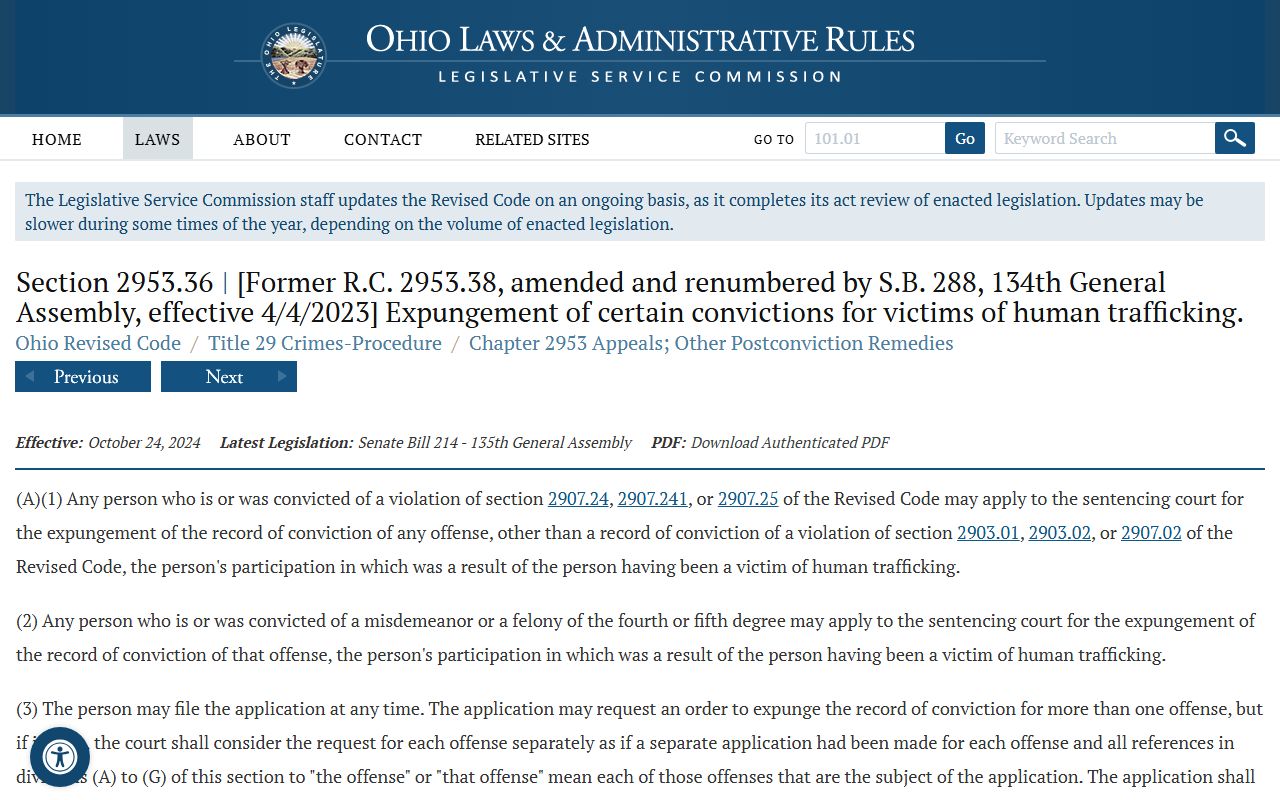
Sealing also reaches the case behind a warrant. Ohio law lets eligible people apply to seal certain records, but not all convictions qualify. Ohio Revised Code section 2953.36 lists the conviction types that are not eligible for sealing. Anyone exploring a sealing or expungement path should review the actual case and the statute before assuming a record can be cleared.
The state's own list of convictions that cannot be sealed is set out in Ohio Revised Code section 2953.36 on the official code site.
The Clerk also notes that redacted versions of records are available for public viewing at the office during normal hours, even when not every document is posted online.