
Does Montgomery County Publish Released Inmates?
The short answer is no. Montgomery County does not put out a separate "released within X days" list. The Sheriff runs a live jail roster through the Miami Valley jails system, and that roster is built for people in custody right now. It says plainly that it holds data on inmates currently in custody in the listed jails only. So once a person is released, their name tends to drop off the public roster rather than move to a "released" page.
This trips up a lot of searchers. A name that showed up yesterday may be gone today, and the roster will not tell you why. The person could be out on bond. They could be moved to another jail. They could be sent to state prison. Or they could simply be released. The roster alone does not draw that line for you.
Because of that gap, you confirm a release through other means. You can call the jail. You can sign up for alerts that ping you when custody status changes. And for people who left the county for prison or supervision, you switch to a state or federal tool. The roster is still the right first stop, since it tells you fast whether the person is still local. After that, the trail moves to the records line and the locator tools below. To see the live roster itself, start with Montgomery County inmate records.
How to Confirm a Montgomery County Release
Confirming a release takes a short, ordered set of steps. You begin with the public roster, then move to a live person if the roster comes up blank. The reason for the order is simple. The roster is free and instant. The phone call costs you a few minutes but gets you a real answer when the screen does not.
Jail general information answers custody questions by phone at 937-225-4160. Staff can often tell you if a person is still held, has been released, or has been moved. Keep the full name and a date of birth ready, since common names slow things down. The steps below lay out the path most people follow.
- Search the Miami Valley jail roster first to see if the person is in county custody now.
- If the name does not appear, call jail information at 937-225-4160 to ask about release or transfer.
- Register with VINELink so you get an alert if custody status changes later.
- If the person was sentenced to Ohio prison or put on supervision, search the Ohio DRC Offender Search.
- If the case was federal, search the BOP Inmate Locator instead.
- If the person must register after release, check the Sheriff's sex offender search.
Note: the roster may not show people housed in other jails or those recently released, so a blank result is a reason to call, not proof a person is free.
Setting Up Release Notifications With VINELink
VINELink is the public side of VINE, which stands for Victim Information and Notification Everyday. The Montgomery County Sheriff links to it as the way to track custody status without calling every day. You register once, pick the person, and the system contacts you when something changes. That change can be a release, a transfer, or a court event, depending on the jurisdiction.
The Sheriff's VINE page lists a victim line at 800-770-0192 and a TTY line at 866-847-1298 for people who cannot use the website. You can also reach the service online at vinelink.com. Alerts can come by phone, email, text, or app, so you choose what fits. This matters most when you want to know the moment a person leaves custody, not days after.
The Sheriff describes the VINE program on its own page, which is worth a look before you register so you know what the service does and does not cover. You can read it on the Sheriff's VINE information page.
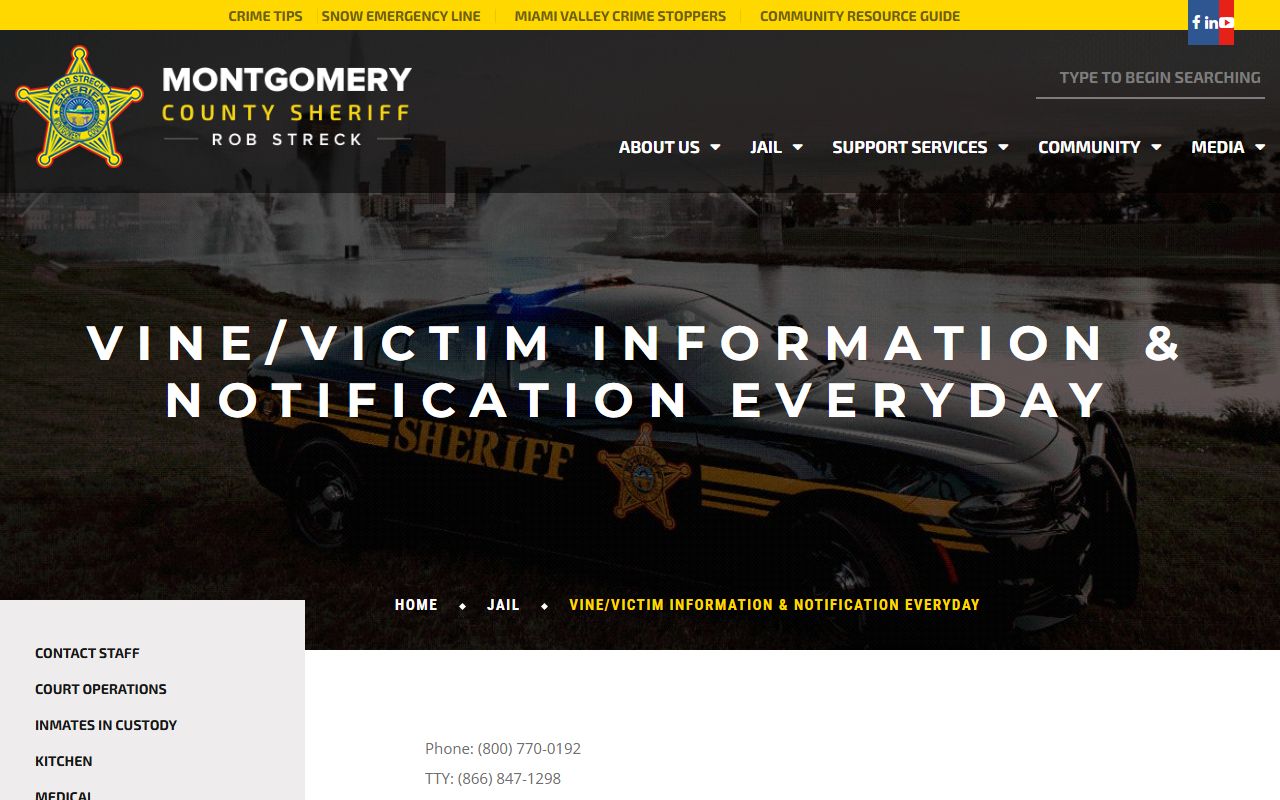
The page above shows how the Sheriff frames VINE as a free victim and public safety tool, with the phone and TTY numbers laid out for callers. Use the steps below to set up an alert through VINELink.
- Open VINELink at vinelink.com and select Ohio as your location.
- Search by the person's name or ID to find the matching custody record.
- Register your phone, email, or text contact so the system alerts you when status changes.
Searching State Releases Through Ohio DRC
Not every case stays in the county jail. When a person is convicted of a felony and sentenced to prison time, they move into the state system run by the Ohio Department of Rehabilitation and Correction. To track that person, you use the Ohio DRC Offender Search, which is free and open to the public.
The tool shows offenders who are now in an Ohio prison, those under Department supervision such as parole or post-release control, and those who have been judicially released. So it can flag a release in two ways. A person may show as no longer incarcerated, or they may show as under supervision in the community. Either result tells you the person has left a prison cell.
One quirk is worth knowing. The official page notes that female offender numbers are generally five digits and may need a leading zero to match. If a number search fails, try a name search instead. You can run the tool at the Ohio DRC Offender Search page. The search fields are summarized below.
| Field Label | Type | Required | Notes |
|---|---|---|---|
| Name search | Text | No | Search by offender name; the public interface is name driven. |
| Offender Number | Text | No | Female numbers run about 5 digits and may need a leading zero. |
| Status scope | System | n/a | Shows people in Ohio prison, under supervision, or judicially released. |
Searching Federal Releases With the BOP Locator
Some Montgomery County cases are charged in federal court, which means custody falls to the Federal Bureau of Prisons. State and county tools will not show those people. For a federal case, you turn to the BOP Inmate Locator, a free national database.
The locator covers federal inmates from 1982 to the present, so it reaches back far. You can search two ways. The Find By Number tab takes a BOP Register Number, a DCDC Number, an FBI Number, or an INS Number. The Find By Name tab takes a first, middle, and last name, and the live screen may let you narrow by race, age, and sex. A federal record may read as Released or Not in BOP Custody once the person is out.
One caution on dates. The BOP warns that release dates can change due to First Step Act recalculations, so a posted date is an estimate, not a promise. Run a search at the BOP Inmate Locator page. The search options are laid out in the table below.
| Field Label | Type | Required | Notes |
|---|---|---|---|
| Find By Number | Tab | No | Accepts BOP Register, DCDC, FBI, or INS numbers. |
| Find By Name | Tab | No | First, middle, last; race, age, and sex may help narrow results. |
| Search | Button | n/a | Returns federal inmates from 1982 to the present. |
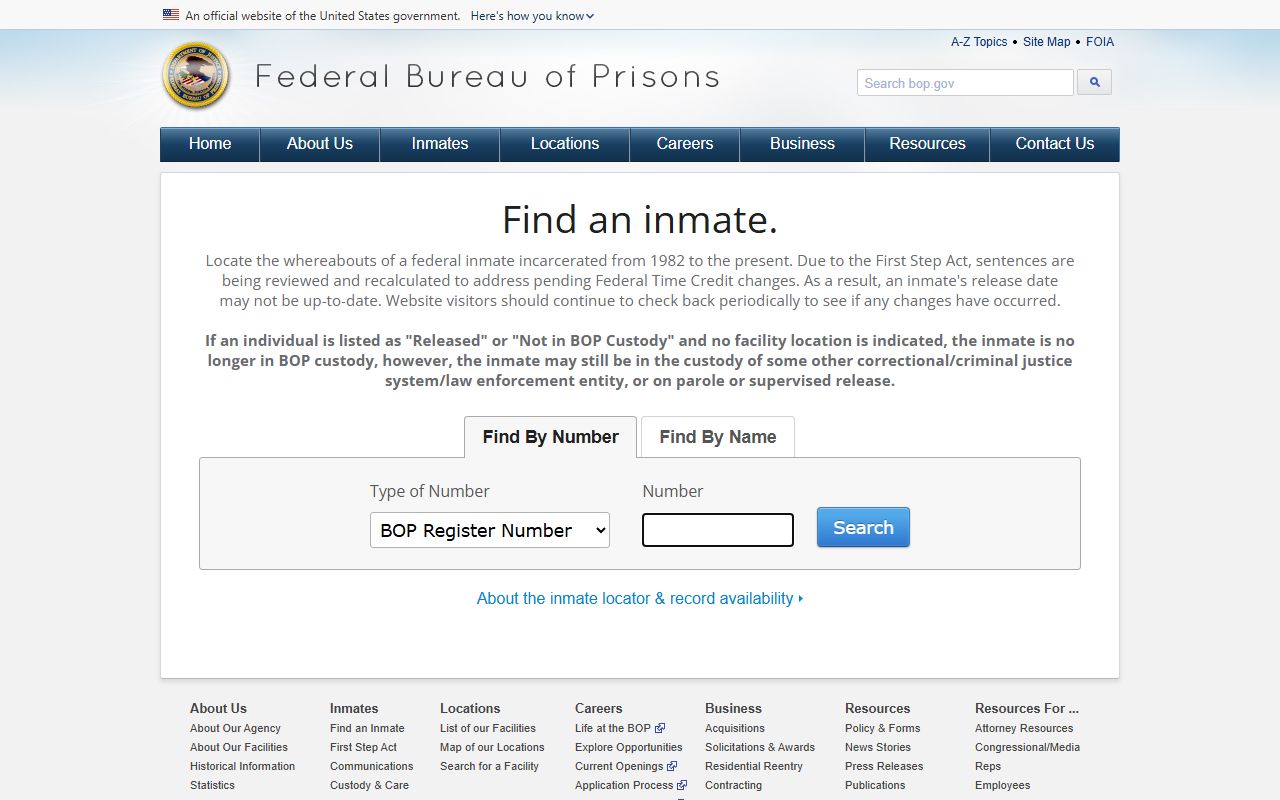
The screen above shows the BOP locator with its Find By Number and Find By Name tabs, the same fields named in the table. Use it whenever a Montgomery County case ran through federal court rather than state or county courts.
The Montgomery County Sex Offender Registry
After release, some people must register as sex offenders. Ohio sets that duty in state law, and the Montgomery County Sheriff keeps the local registry and a public search. Registration rules sit in Ohio Revised Code section 2950.04, which spells out who must register and when.
The Sheriff's site links the search to a local registry platform. You can look up offenders by name or by address and radius, which lets you check who lives near a home or school. Many registry systems also offer email alerts so you hear about changes in your area. Detailed local search fields were not fully captured, but the common modes appear below.
The registry is its own check, separate from the jail roster and the prison locators. A person can be fully released and still appear here, since registration follows them into the community. Search options are summarized in the table.
| Field Label | Type | Required | Notes |
|---|---|---|---|
| Offender name | Text | No | Sheriff's site links to a local iCrimeWatch registry search. |
| Address / radius | Text / map | No | Search who is registered near a given address. |
| Email alerts | Workflow | No | Registry tools commonly support neighborhood notifications. |
Parole and Probation in Montgomery County
Release rarely means a clean break. Most people leave prison under some form of supervision, and that supervision is part of how you find them. In Ohio, the Adult Parole Authority within the DRC oversees parole and post-release control. The local Common Pleas Court oversees probation for people who serve their term in the community instead of prison.
Supervision comes with rules. A person may have to report to an officer, hold a job, stay drug free, and avoid contact with certain people. Breaking those rules is a violation, and a violation can send a person back to custody. Members of the public who want to report a concern about someone under supervision can route it through the DRC. The Ohio DRC Offender Search noted above is the same tool that flags whether a person is currently under Department supervision.
If a case ran through the local court rather than state prison, probation is handled at the county level by the Montgomery County Court of Common Pleas. For the records side of a conviction, the Montgomery County arrest records page covers how charges and dispositions are documented. The contact card below points to the state agency that manages supervision.
Ohio Adult Parole Authority (DRC)
Ohio Department of Rehabilitation and Correction
Columbus, OH
See DRC site for unit contacts
Reentry Resources in Montgomery County
Leaving custody is a hard reset. Most people need housing, a job, an ID, and often treatment, all at once. Montgomery County materials point to several local supports. The Community Overdose Action Team, known as COAT, works on addiction and overdose response across the county. The county also keeps a Community Resource Guide that lists services, and the jail runs volunteer programs that carry into the community.
Paperwork is the first wall many people hit. A released person often needs a birth certificate, a Social Security card, a state ID or driver license, and proof of address before they can rent a home or take a job. Communication tools used inside the jail, such as Pay Tel and SmartInmate, can help keep family contact steady through the move home. The list below sums up the named local supports.
- Community Overdose Action Team (COAT) for addiction and overdose response.
- Montgomery County Community Resource Guide for service listings.
- Jail volunteer programs that continue support after release.
- Pay Tel and SmartInmate for keeping family contact during the transition.
Specific halfway house names, transportation help, and release-day procedures were not located in the official sources captured, so verify those directly with the Sheriff's office or the county before relying on them. The DRC and local reentry coalitions are the right places to confirm current programs.
Civil Rights and Voting Rights After Release
Release also raises the question of rights. In Ohio, people with felony convictions generally regain the right to vote once they are released from incarceration. A person held only pretrial, or serving time for a misdemeanor, may keep the right to vote the whole time. So the loss of voting rights is tied to a felony prison term, not to an arrest.
That said, rules shift and details matter. Verify current voting guidance with the Ohio Secretary of State before you act on it, since registration steps and deadlines change. The Secretary of State is the official voice on who can vote and how to register after release.
Other rights move on their own tracks. Firearm rights and some job rights can stay limited after a felony, and they may need a separate legal step to restore. People who want to clear a record can look at sealing or expungement, set in Ohio Revised Code sections 2953.32 through 2953.36. Sealing hides a record from most public view, while the court process decides who still gets to see it. For background on related filings, the Montgomery County warrant records page covers active and recalled warrants tied to a case.
Using VINELink to Track Custody Status
VINELink deserves a second look because it is the one tool built around the exact question searchers ask, which is whether a person is in or out. The county roster gives a snapshot. VINELink gives a watch. You set it once and let it run, and it tells you when the status flips.
The service runs nationwide, so you pick the state and agency that holds the person before you search. From there you can register notifications and adjust how you want to hear about changes. For Montgomery County, the Sheriff's VINE phone line and the website work the same way, and the TTY line covers callers who need it.
You can open the tool directly at VINELink to begin a search or set an alert. The screen below shows the public search and registration flow.
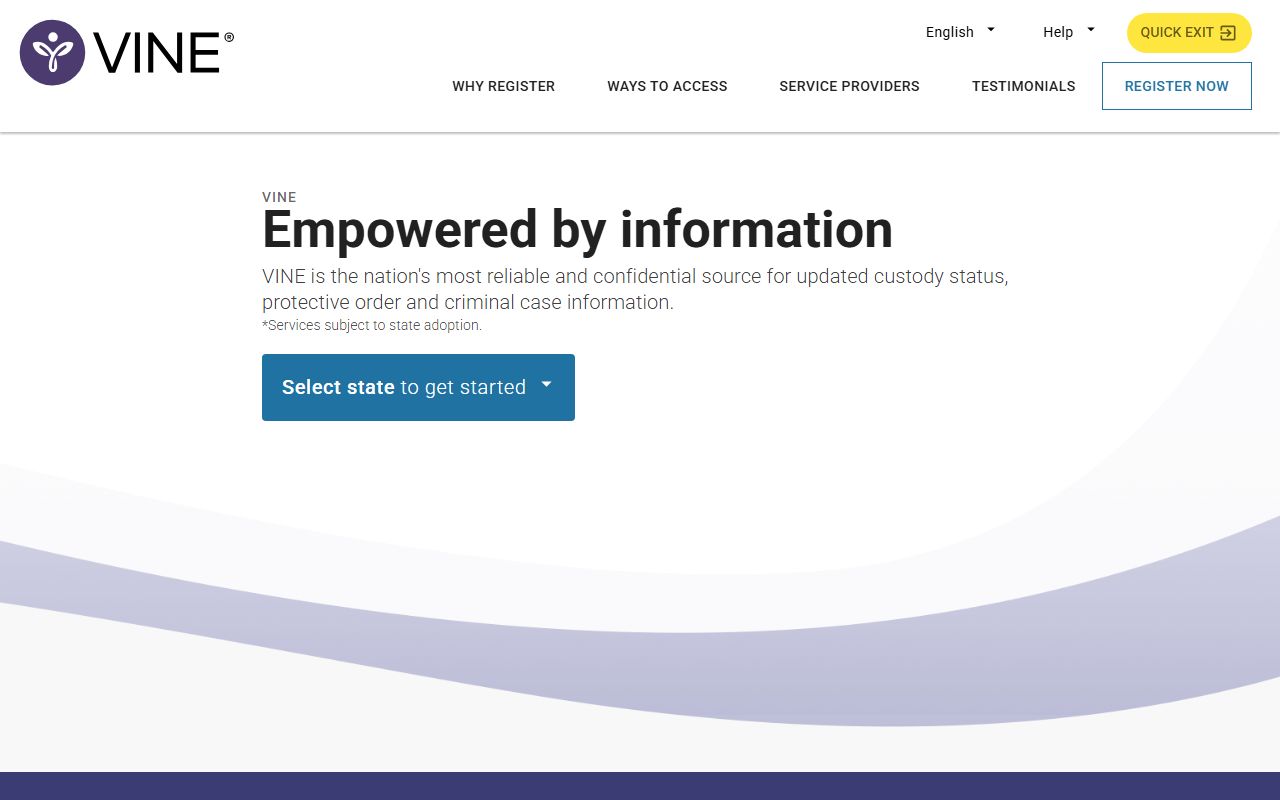
The VINELink screen above is where you choose a location, search a name or ID, and sign up for the alerts described earlier. It ties together the county, state, and supervision tracking covered across the rest of the topics here.