
How to Search Montgomery County Court Records
The main search tool is Public Records Online v3, run by the Montgomery County Clerk of Courts. It is free. It covers Municipal Court traffic, criminal, and civil cases, Common Pleas General Division criminal and civil cases, Domestic Relations cases, and Second District Court of Appeals cases. It does not cover Probate Court files or juvenile records. Those sit with separate offices. The screen capture below shows the live portal and its disclaimer.
Before you start, gather what you know. A case number works fastest. A party's last name works too. For a ticket, use the ticket number. The portal returns only the first 1,000 records for any search, so narrow your terms when a name is common.
You can open the official portal at the Clerk's Public Records Online v3 search page.
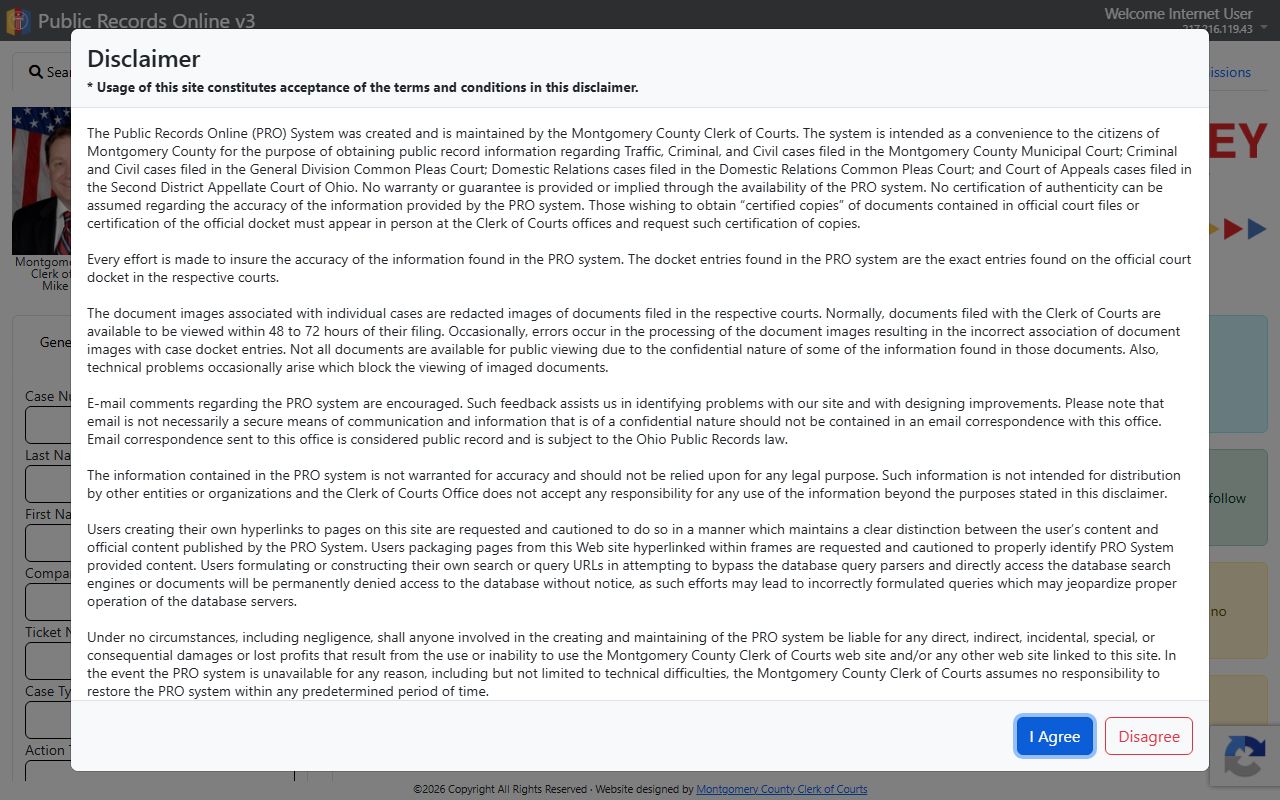
The portal opens with a disclaimer screen, and using it means you accept the terms. From there the search panel lets you switch between a general search and an attorney search. The steps below follow the standard path.
- Open the portal at pro.mcohio.org and read the disclaimer.
- Pick the General Search tab and enter a party name, case number, company name, or ticket number.
- Narrow the search by Case Type, Action Type, or a Begin Date and End Date range.
- Open a result to read the docket entries, which match the official court docket.
- For a copy you can rely on, request a certified copy from the Clerk's office instead of printing the online page.
Note: document images normally post within 48 to 72 hours of filing, so a brand new case may show a docket entry before the image is online.
The Montgomery County Judicial System
Ohio builds its trial courts around the Court of Common Pleas, and every county has one. Montgomery County's Common Pleas Court runs four divisions. The General Division hears felony cases and major civil suits. The Domestic Relations Division handles divorce and adult family matters. The Juvenile Division covers people under 18. The Probate Division handles estates, guardianships, adoptions, name changes, and marriage licenses.
Below the Common Pleas Court sits the Montgomery County Municipal Court. It carries the high volume docket: traffic tickets, OVI charges, misdemeanors, small claims, evictions, and parking cases. It splits into an Eastern Division and a Western Division. Some towns also run Mayor's Courts for local ordinance and traffic matters. Appeals from county trial courts go to the Second District Court of Appeals, and a few reach the Supreme Court of Ohio. The General Division's own site shows its current dockets and judges.
Case flow: Municipal or Mayor's Court › Court of Common Pleas › Second District Court of Appeals › Supreme Court of Ohio
You can view the General Division on the Common Pleas General Division site, which lays out its courtrooms and case information. That page is the best starting point for felony and large civil matters.
The table sums up which court hears what. Use it to pick the right division before you search.
| Court | Jurisdiction | Case Types |
|---|---|---|
| Common Pleas, General Division | General trial court | Felonies, major civil, administrative appeals |
| Common Pleas, Domestic Relations | Adult family law | Divorce, dissolution, support, protection orders |
| Common Pleas, Juvenile | Under 18 | Delinquency, custody, paternity, juvenile traffic |
| Common Pleas, Probate | Estates and status | Wills, guardianships, adoptions, marriage licenses |
| Municipal Court | Limited jurisdiction | Traffic, misdemeanor, small claims, eviction |
| Second District Court of Appeals | Appellate | Appeals from county trial courts |
The Juvenile Court runs as its own division with its own building and clerk's office. It notes that it may be the only juvenile court in Ohio that holds a mandatory hearing for every juvenile traffic citation. You can see its departments and hours on the Montgomery County Juvenile Court site, shown below.
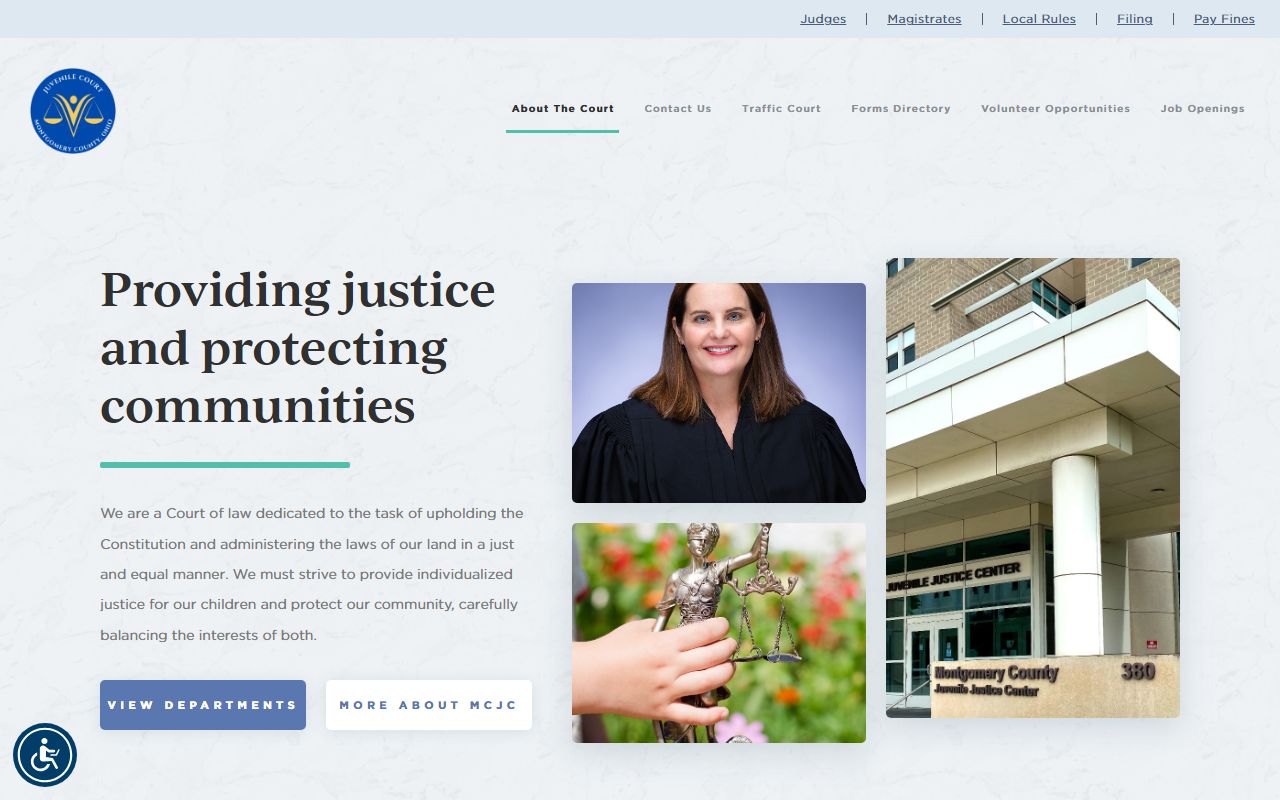
Juvenile records are not handled like adult court records, which the restricted-records section explains.
Montgomery County Courthouses
Court business spreads across several downtown Dayton buildings. The Courts Building at the corner of North Perry Street and West Third Street holds the General Division, the Clerk's Records Section, and the Probate Division. Domestic Relations sits a short walk away on West Third Street. Juvenile Court is on West Second Street. The Sheriff's Office and jail are also on West Second Street. So "go to the courthouse" can mean several addresses within a few blocks. The county courts landing page links each one.
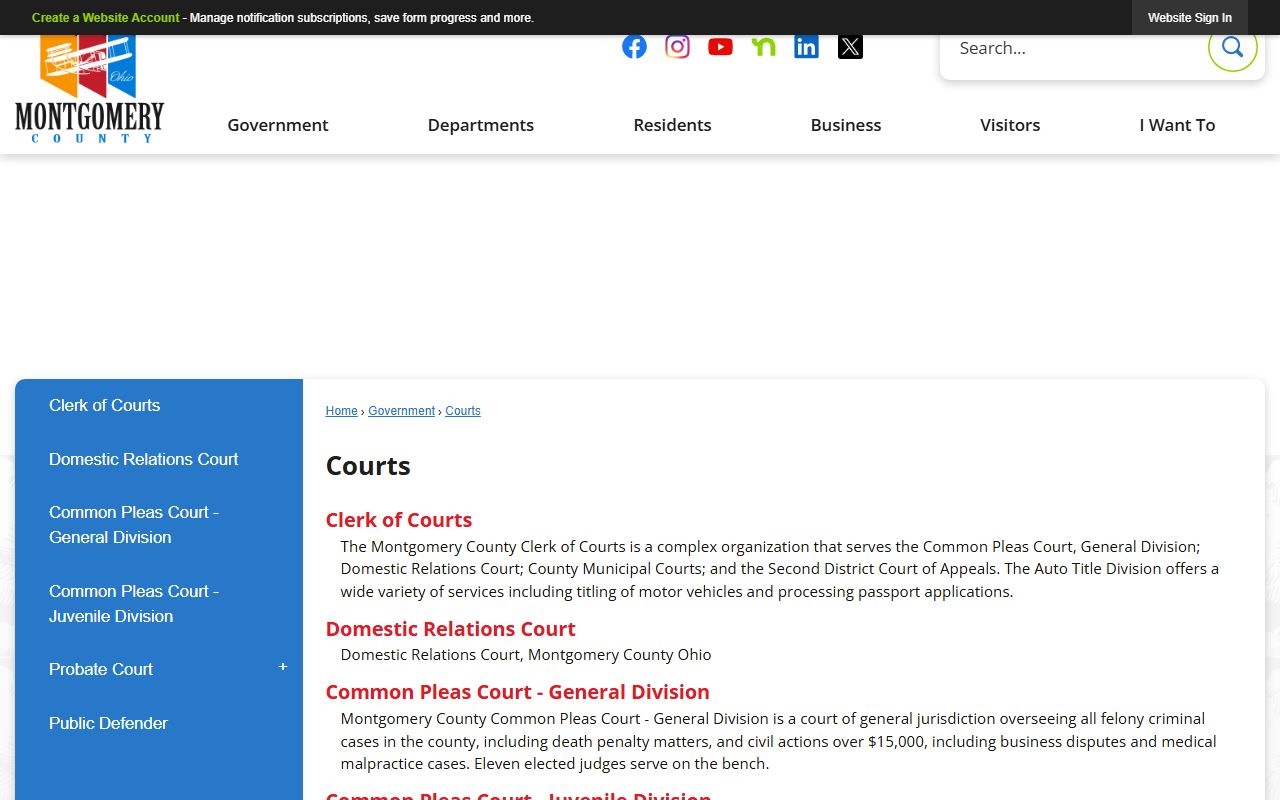
That page, the Montgomery County courts page, routes you to each division's own site. The cards below list the main addresses.
Clerk of Courts, Records Section
41 N. Perry Street, Room 104
Dayton, OH 45422
937-496-7762
Types of Court Records Available in Montgomery County
Montgomery County court records fall into a few main groups. The court that hears a case keeps that case file. Public access is the default, but some files are sealed, redacted, or closed by law. The list below shows the common types and where they sit.
Common Pleas holds felony and large civil files. Municipal Court holds traffic and misdemeanor files. Probate keeps estate and marriage records. Domestic Relations keeps divorce files. Juvenile Court keeps its own restricted files.
- Criminal records - felony indictments, pleas, sentencing entries, and misdemeanor cases from Municipal Court.
- Civil records - lawsuits, foreclosures, contracts, small claims, and money judgments.
- Family and divorce records - divorce, dissolution, custody, support, and protection orders from Domestic Relations.
- Probate records - wills, estates, guardianships, adoptions, and name changes.
- Traffic records - citations, OVI cases, parking, and failure-to-appear entries in Municipal Court.
For the full breakdown by court, see the Montgomery County court records page.
What Montgomery County Court Records Show
Each case file holds a set of standard fields. The docket lists every filing and hearing in order. Document images attach to those entries when they are public. Names of parties, the case type, the charge or cause, and the final outcome all appear in the record. The table breaks down the fields you will see most.
| Field | What It Shows |
|---|---|
| Case Number | The court's file number; format changes by case type and division. |
| Filing Date | When the case began; used with the date-range search filters. |
| Parties | Plaintiff and defendant, or petitioner and respondent, plus attorneys. |
| Charges / Cause | The crime charged or the civil claim that started the case. |
| Disposition | The current or final outcome of each charge or claim. |
| Sentence / Judgment | The court's order: fine, jail, probation, money owed, or other relief. |
Some fields are redacted. Personal identifiers, sealed matters, and protected-party details may not show online.
Public Access Laws for Montgomery County Court Records
Ohio treats most government records as open. The Ohio Public Records Act sets the rule, and court records follow a separate set of court rules on top of it. The county's own public-records page says you do not need a special form, you do not have to give your name, and you do not have to say why you want a record. You only have to describe the record well enough for staff to find it. The page below explains the county's process.
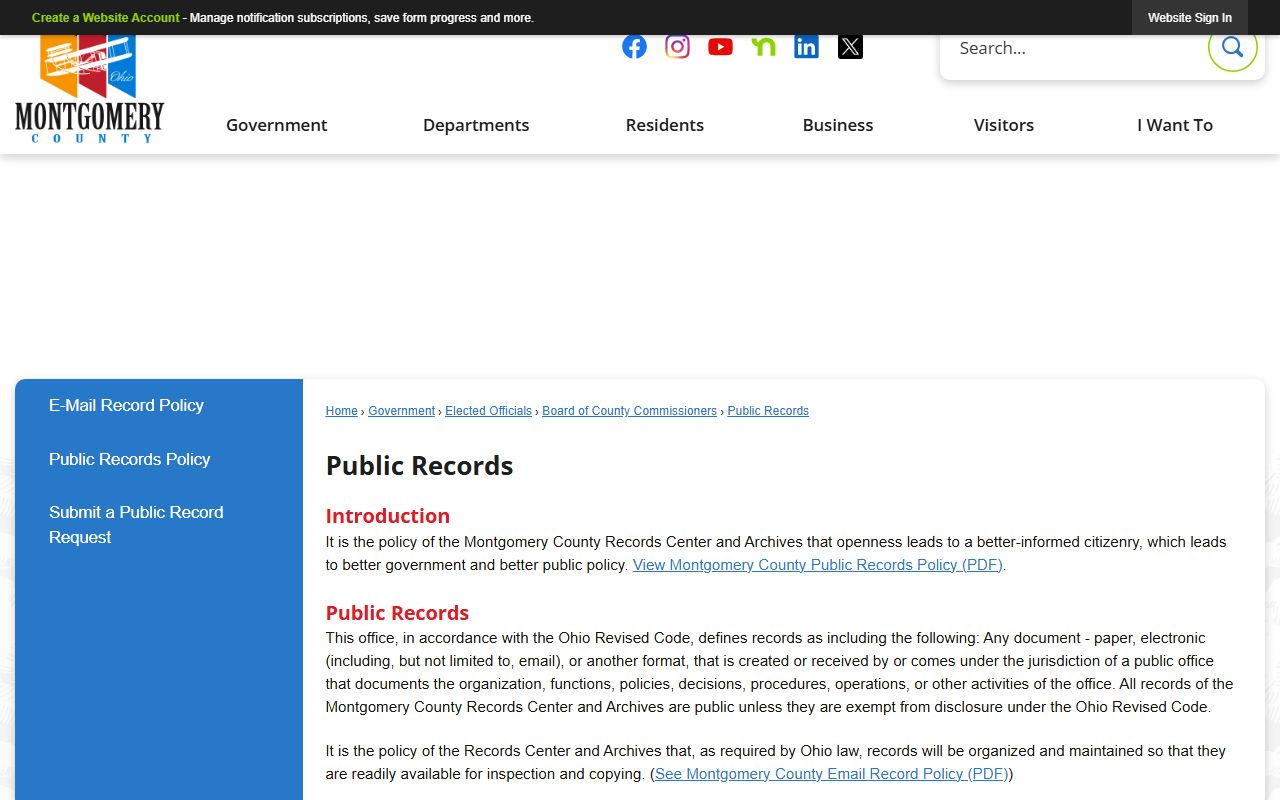
The county lays out costs and routing on its public records page. Court records add a layer: the Rules of Superintendence treat online access and courthouse access differently, which is why some files are at the counter but not on the web. See the Montgomery County public records page for the request steps.
Key Statutes:
Ohio Revised Code § 149.43 - The Public Records Act; sets the duty to let the public inspect and copy records.
Ohio Rules of Superintendence 44-47 - Define court records and the presumption of public access, with limits on remote access.
Ohio Revised Code § 2101.24 - Gives Probate Court its own jurisdiction, which is why probate files sit apart from the Clerk's portal.
Records That Are Restricted or Confidential
Open access has limits. Several record types are closed or partly hidden in Montgomery County. Juvenile records are restricted under Ohio juvenile law. Adoption and mental-health files at Probate are marked not readily available. Civil stalking, sexually oriented offense, and domestic violence protection orders are kept off the online portal to protect the people they shield, citing federal law at 18 U.S.C. 2265. Sealed and expunged criminal records drop out of public view under state law.
You can still ask a court to let you view a sealed record in limited cases. To seal your own record, review the case first in the portal or at the Clerk's office, then file a motion in the court that handled it. A judge decides whether to grant it. Ohio Revised Code § 2953.32 covers sealing of conviction records, and not every conviction qualifies. The Montgomery County arrest records page goes deeper on sealing.
Specialty Courts in Montgomery County
The Common Pleas General Division runs five specialized dockets that use evidence-based methods for high-risk people. These dockets mix court dates, treatment, testing, and supervision. They aim to cut repeat offenses rather than just punish.
One is a Veterans Treatment Court for eligible veterans whose service-related conditions, such as substance use, PTSD, or traumatic brain injury, played a part in the offense. It links court supervision with the Dayton VA Medical Center and community services. A drug and treatment docket works the same way for people with addiction-driven cases. Eligibility usually turns on residency, legal screening, and a clinical review. The court lists its programs on its specialized dockets page.
Montgomery County Sheriff and Jail
The Montgomery County Sheriff's Office, led by Sheriff Rob Streck, runs the county jail on West Second Street in Dayton. The office handles bookings, the inmate roster, court security, and records requests. Its homepage links the jail, inmate information, programs, and the VINE notification service. The screen below shows that homepage.
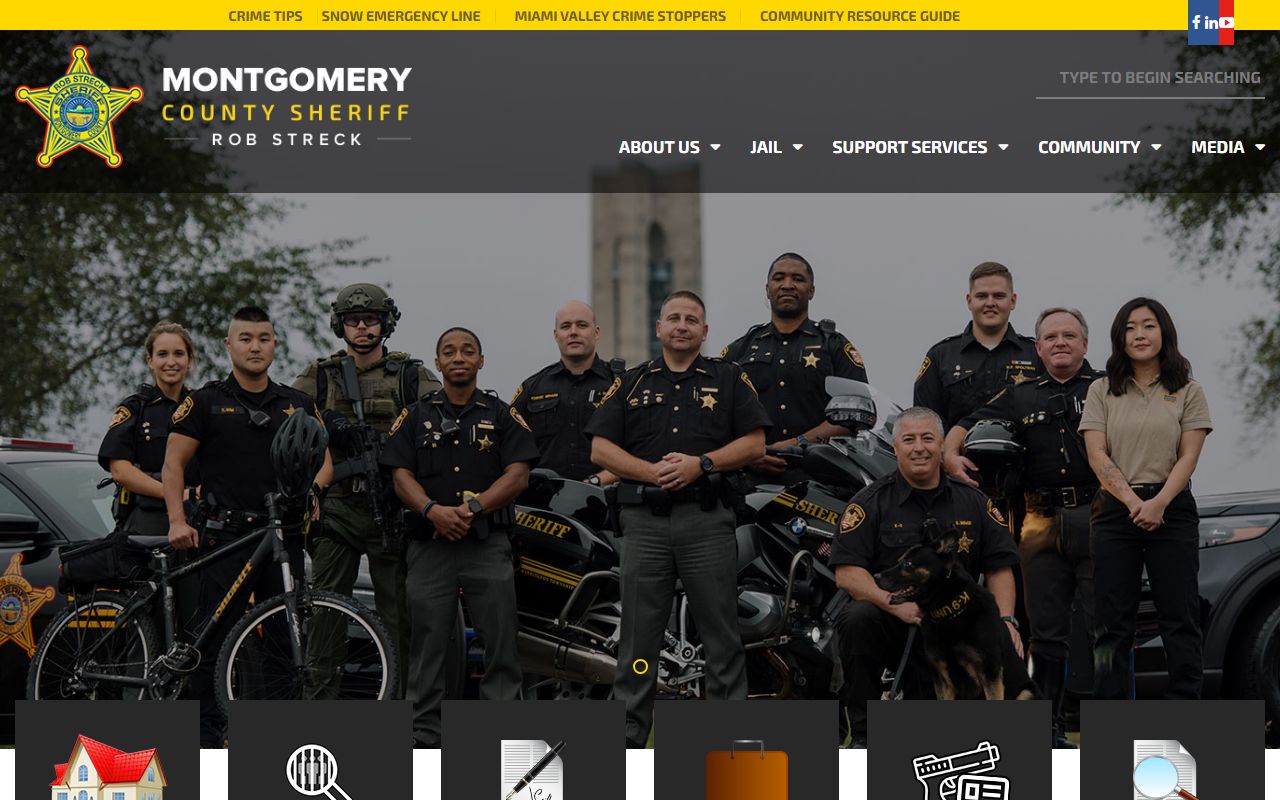
The Sheriff posts contact lines and major services on the Sheriff's Office site. The live jail roster updates every 30 minutes. For the full lookup, visiting rules, and how to send money or mail, see Montgomery County inmate records. For active orders to arrest, see warrant records.
Marriage, Divorce, and Probate Records
Marriage and probate records run through Probate Court. Divorce files run through Domestic Relations. The Probate Court issues marriage licenses for $75 and keeps estate, guardianship, and adoption files. Domestic Relations hears divorce, dissolution, support, and custody between adults, and its self-help portal walks people through filing without a lawyer. The portal is shown below.
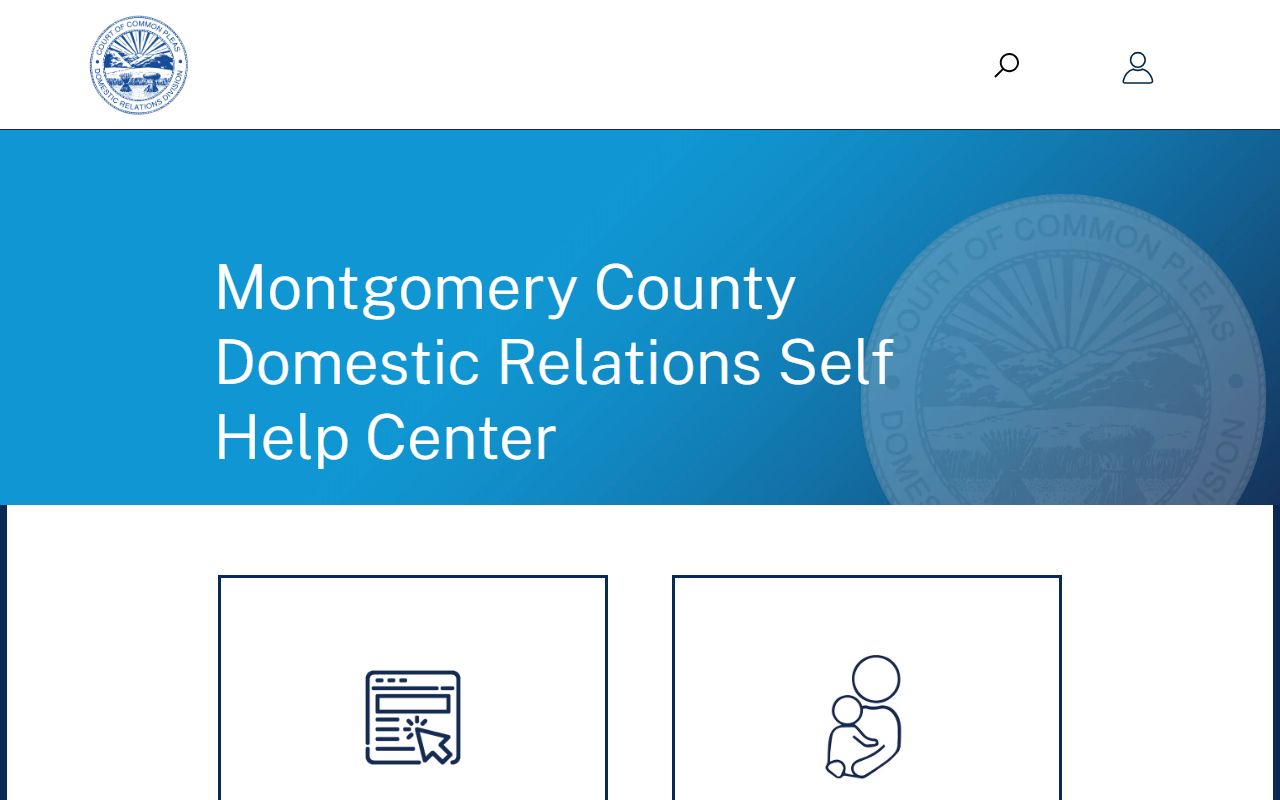
You can start a case on the Domestic Relations self-help portal. The Probate Court's own home page, captured below, lists its judge, hours, and forms.
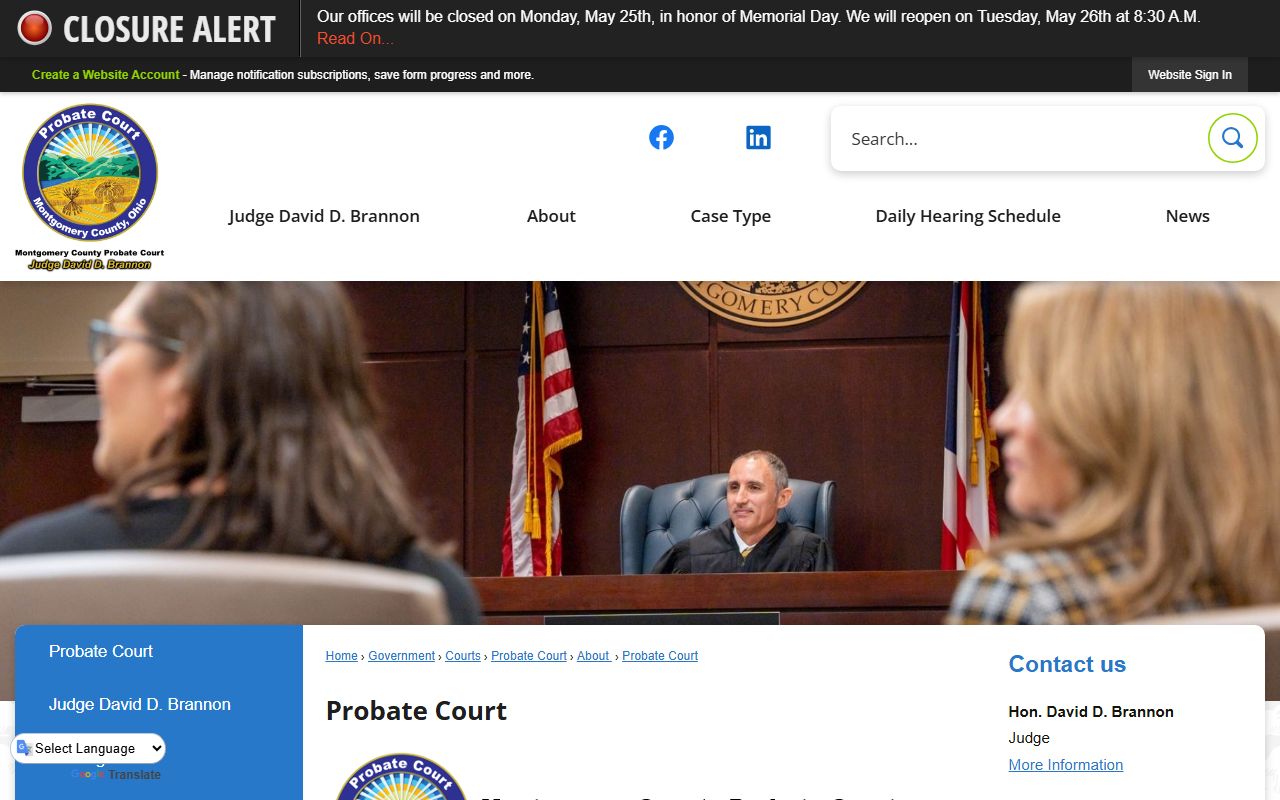
For full detail, see marriage and divorce records and probate records. A few common probate terms help when reading these files.
- Testator
- The person who makes a will.
- Executor
- The person named to carry out a will, also called a fiduciary.
- Conservator
- A person appointed to manage the affairs of an adult who needs help.
Montgomery County Court Records Fees
The Clerk charges set fees for copies. A plain copy is cheap. A certified copy costs more because a deputy clerk signs it and adds the court seal. Authenticated copies, sometimes called triple-sealed, cost the most and carry the judge's and Clerk's original signatures. The table lists the main charges.
| Item | Amount |
|---|---|
| Plain copy per page | $0.10 |
| Certified copy per page | $1.00 |
| Authenticated / exemplified copy | $5.00 |
| County records on compact disc | $1.00 per disc |
| Emailed documents | No charge |
Note: the Clerk wants payment up front and a self-addressed stamped envelope for any copies sent by mail.
How to Interpret Montgomery County Court Records
Court files use shorthand. Knowing a few terms keeps you from reading a record wrong. A charge is not a conviction. An arrest only means a person was booked. The case ends with a disposition, and only then do you know the result. A case "dismissed with prejudice" is over and cannot be refiled. One "dismissed without prejudice" may come back.
Case-type codes hint at the kind of case: CR for criminal, CV for civil, DR for domestic relations, TRD or TRC for traffic. A capias is a warrant the court issues after a missed date. A continuance just pushes a hearing back. When a docket entry confuses you, the Clerk can explain what an entry means, though staff cannot give legal advice.
Accuracy and Record Limitations
Online records lag behind the paper file. Document images normally post 48 to 72 hours after filing. Some never go online because they hold confidential data. The portal also caps results at 1,000 and is not certified. So treat an online printout as a lead, not proof. County demographic context, useful for population and jail data, comes from the Census, shown below.
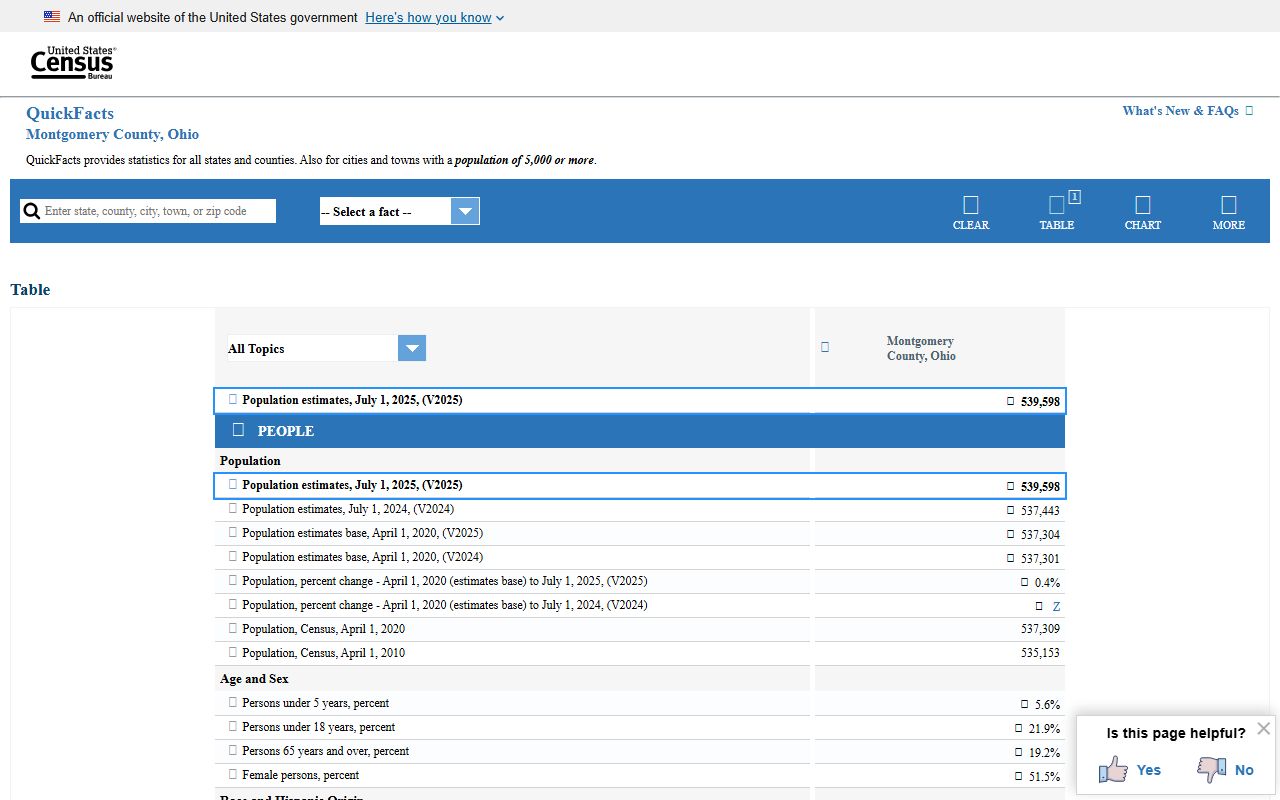
You can check county population figures on Census QuickFacts. For a record you plan to rely on, always confirm with the office that holds it.
Note: Online court data can be incomplete or out of date, so verify any detail with the Clerk or the originating court before you act on it.
History of Montgomery County Courts
Dayton has served as the county seat since the early statehood years. The old Montgomery County Courthouse, built in 1847, still stands downtown as a Greek Revival landmark, while modern court work moved into the Courts Building nearby. County records now spread across the Courts Building, the Reibold Building, the Administration Building, Juvenile Court, and the jail.
The county Records Center and Archives holds more than 47,000 record locations, including Probate births and deaths from 1867 to 1908 and material tied to the 1913 Dayton flood. Those archives do not circulate like library books. Researchers view them on site. For older filings and genealogy, the archives matter as much as the online portal.
Frequently Asked Questions
Are online Montgomery County court records certified?
No. The portal disclaimer says no certification of authenticity can be assumed from online data. A printout from Public Records Online v3 is fine for reference, but courts and agencies will not accept it as an official copy. For that you need a certified copy from the Clerk's office, which costs $1.00 per page and carries a deputy clerk's signature and the court seal. Authenticated copies cost $5.00.
How current are the document images online?
Document images attached to docket entries are redacted and normally available within 48 to 72 hours of filing. A new case can show a docket entry before the image posts. Some documents never appear online because they hold confidential information or hit a technical block. The docket entries themselves match the official court docket.
Where do I get a Montgomery County marriage license?
Marriage licenses come from the Probate Court's Marriage License Department at 41 N. Perry Street, 2nd Floor, in Dayton. Hours run 8:30 a.m. to 4:15 p.m., Monday through Friday, and the court asks couples to arrive by 4 p.m. The fee is $75. Both people must apply together in person with valid photo ID. The full process sits on the marriage and divorce records page.
More on the Montgomery County Court Records FAQ page.